

THANK YOU FOR SUBSCRIBING
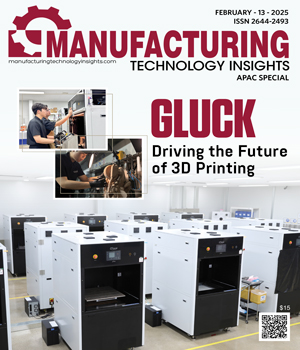
Traditional manufacturing methods for complex structures or customized mass production are often limited by high tooling costs and slower production speeds. In stark contrast, Gluck’s technology enables the production of intricate shapes and customized mass production without the need for molds, reducing initial costs and maximizing production flexibility. It also accommodates client needs for specific minimum order quantities. This reduces the burdens of overstocking and minimizes the risk of unsold products. This also allows clients to test products in smaller batches and provide feedback for improvements. Receiving practical feedback from the design stage helps Gluck establish optimized production conditions for products. DfAM consulting services guide clients through product weight reduction and process improvements. Through its DfAM expertise, Gluck achieved significant weight reduction and improved thermal efficiency in projects for major companies such as Samsung, enhancing productivity and reducing costs Working closely with domestic and international material development partners, Gluck applies innovative functional materials, such as inorganic composite materials, and achieves weight reductions of up to 89 percent through lightweight design and efficient material usage. In a collaborative project with a major Korean corporation, Gluck utilized electrostatic discharge materials to replace parts that previously required aluminum machining. The parts were optimized for lightweight construction, resulting in cost savings and enhanced productivity.
I f an artisan has more or better tools, does that make him less of a craftsman? Of course not. But, it can be stated with a fair degree of certainty that the quality of the product lies almost exclusively in the craftsman’s skills rather than the quality of the tool he uses. True craftsmanship can be modestly described as creating an object that embodies both art, which stems from talent, and science–a combination of training and knowledge. Keeping this ideology of craftsmanship and precision at its heart, Japan-based Ohori Grinding has carved itself the station of being one of the few enterprises that specializes in ultra-high precision grinding of components made of metal and other materials. Founded 50 years ago, Ohori Grinding is now led by Ken Ohori, a leader who shifted the company’s mission from mass production to prioritizing high precision and quality instead. With a team of approximately 40 skilled grinding technicians engaged in processing parts requested by clients, Ohori excels in delivering grinding services that are difficult even when using an NC program controlled by a computer. Although NC machine processing of parts has become mainstream worldwide, the technique of fine-tuning and finishing products while preventing deformations caused by heat and stress has become a rare skill and a highly sought-after art in the manufacturing industry. “Our philosophy is that ‘anything less than 1/100 mm is the realm of a skilled technician,’ and each day our grinding technicians are improving their processing techniques,” says Ken Ohori, President of Ohori Grinding. The most difficult part of the grinding process is controlling the amount of heat that is generated. Since metals expand and deform due to heat produced by friction, one must be familiar with each metal’s deformations and thermal expansions when grinding. Despite this challenge, one of the core strengths of the Ohori team is its ability to grind delicate materials that other manufacturers cannot machine, such as aluminum— which is soft and difficult to grind—as well as stainless steel, titanium, and Inconel– an alloy of nickel-containing chromium and iron. Additionally, Ohori also offers V grooves, R grooves, polyhedral angles, external and internal grinding, and taper grinding, all in a shorter time than traditional CNCs.

Additive manufacturing or 3D printing has fundamentally transformed the way companies develop, build, and deliver products, fostering a universe of new possibilities. Not long ago, the process of prototyping was heavily labor-intensive and time-consuming. 3D printing is empowering companies to miraculously streamline their prototyping technology. The costs associated with 3D printing often stand in the way of its wide-scale adoption in production processes. Also, qualifying and validating parts is a major concern with 3Dprinting. Companies are often on the fence, deciding where 3D printing fits in their supply chain due to their limited knowledge of the technology. While there are numerous factors that deter companies from embracing additive manufacturing, P.M. Technologies is changing the game with a perfect blend of expertise and innovation. P.M. Technologies offers its expertise in additive manufacturing, design, and data analysis to a wide range of industries and provides companies with custom part design and manufacturing, product development, and additive manufacturing consulting services. At the core, P.M. Technologies designs parts for 3D printing and either prints them in-house or outsources to manufacturing partners. The company is also integrating 3D printing with other technologies like robotics and data analytics to ensure consistency and better quality of products. “We’re highly focused on hybrid manufacturing. Rather than just directly printing parts for our clients, we also design tooling for casting or molding processes. We 3D print the tooling and then follow a conventional process. This saves a lot of time and money for our clients while developing a product and allows us to prototype and iterate faster at a lower cost relative to typical molding houses,” says Philip Morton, Founder and CEO of P.M. Technologies.

Wilbertus Darmadi, CIO, Toyota Astra Motor

Ralf Anderhofstadt, Head of Center of Competence Additive Manufacturing - Daimler Trucks & Buses, Daimler Buses | EvoBus GmbH

Andrew J. Wong, Head of Business Development, APAC, Continental Mobile Robots
A multifaceted approach to 3D printing education is important.
3 D printing, or additive manufacturing, has transformed the manufacturing landscape over the past decade. Once viewed as a niche technology, it has become a vital innovation driver across industries like healthcare and aerospace.
Empowering Sustainability with 3D Printing Technology
APAC is leading the integration of recycled and biodegradable materials, such as biopolymers, recycled plastics, and reclaimed metals, into 3D printing processes. This technology facilitates localized, on-demand manufacturing and extends product lifespans while transforming industrial waste into usable materials. Countries like Singapore, China, and Japan exemplify this progress by using 3D printing to produce housing components, furniture, and remanufactured vehicle parts.
Key drivers of 3D printing’s growth in APAC include crosscountry collaborations, technological advancements in biopolymers and recyclable filaments, and supportive government policies offering financial incentives and establishing regulatory frameworks. The technology also minimizes logistics-related carbon footprints, enabling production closer to consumption points.
Substantial investments in research by governments and private enterprises are expanding the use of sustainable materials in 3D printing. As APAC works to close the loop in manufacturing, 3D printing is set to become a cornerstone of its sustainable industrial future, fostering a resilient and resource-efficient economy.
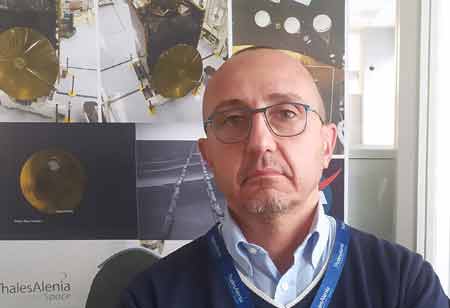
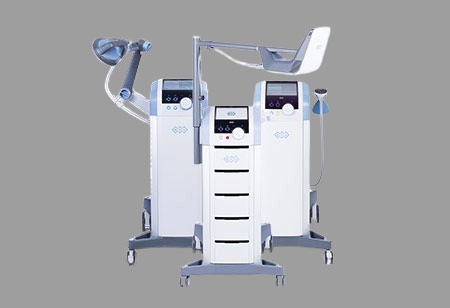
This edition features GLUCK and insights from Fabrizio Poscente, Head of Mechanical Technology and Processes Engineering Department at Thales Alenia Space, and Gareth Pepper, Sales Director at BTL Industries. The APAC region’s combination of robust economic growth and a commitment to environmental responsibility provides a sustainable innovation model for the global community. We hope these valuable insights from industry leaders featured in this edition will assist you in making informed decisions for your businesses.

Manufacturing Technology Insights Weekly Brief
Be first to read the latest tech news, Industry Leader's Insights, and CIO interviews of medium and large enterprises exclusively from Manufacturing Technology Insights
