

THANK YOU FOR SUBSCRIBING
A featured contribution from Leadership Perspectives: a curated forum reserved for leaders nominated by our subscribers and vetted by our Manufacturing Technology Insights Advisory Board.


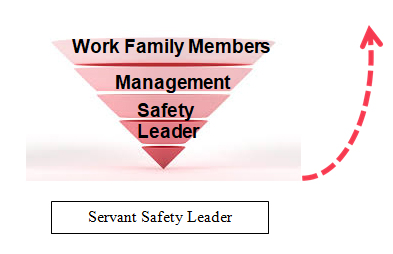
The Inverted Safety Leadership Organizational Model places the servant safety leader with the highest authority and greatest access to resources at the bottom of the historical organizational pyramid or model. Placing the servant safety leader at the bottom of the organizational model shows how the organization believes the work family members closest to the work are supported and served by the leader. Think of what I am describing as an historical organizational model inverted or turned upside down.
This means Servant Safety Leaders serve the work family members who are at the highest point of safety risk, doing the hands-on work, and the ones who are need of the most service:
• Frontline construction, oil -gas field, utilities, and agriculture work family members
• Inexperienced work family members
• Risk taking work family members
Think of an upside-down pyramid with the leader who controls the resources, has great influence, and has a great number of work family members in the organizational remit at the bottom of the inverted pyramid serving all that she or he serves as a leader.
The Best Leaders inspire, support, and guide their work family members in being effective in executing work safely by 1. sharing knowledge – providing training, 2. Providing effective safe work standards to complete work, and by coaching work family members where they work.
I have created and presented safety training to people from the ages of 5 through early 70s as part of my role as a safety leader. The one standing item that I try to incorporate in my safety training delivery is to make relatable to the receiver’s reality of knowledge, maturity, education, and other specific influencers. I delivered safety training in St Lucia that included group prayer before we started, for that is what my work family members wanted and needed to embrace the training. Servant safety leaders modify their leadership styles within reason to serve the work family (e.g., Praying before safety training in St Lucia).
 I have participated in the development of safety standards for 28 years at the site, business unit, and corporate levels. I have always believed that safety standards should include easily understood language, sequential steps of applicable real-world actions, include specific roles – responsibilities, and be approved by the work family members that do the work. I have been exposed to plenty of smart people who are great writers who had the role of creating safety standards without the knowledge of how the work is done.
When I served as a Safety Manager for Terminal Operations Organization along the East Coast of the United States and Caribbean, my supervisor assigned me with the project of rewriting our safety standards. His expectation was to make the safety standards no more than two pages in length. This challenge was creative and required me to rethink how we were documenting and communicating our expectations of how work was to be safely completed.
Coaching work family members in the safe execution of work is not limited to high hazard field work. I have a current focus with my work family right now on office safety. Sometimes, we forget that safety hazards exist in all areas of work, community, and at home. My wife suffered a serious shoulder injury at home while descending the stairs. Her injury was far worse than any injury I have ever suffered as a college football player, professional firefighter, and chemical plant emergency response team leader, to name a few comparisons.
Constant coaching is important for all of us in the safety space. That constant reminder of “Be Safe” is as important and affirming as saying “I Love You” to a spouse. The specific and periodic engagement of safe work planning and safe work execution where the work is done is profoundly important by leaders to show how the inverted organizational pyramid works in the safety space. Safety leaders serve the work family by providing continuous safety coaching.
The placement of the servant safety leader at the bottom of the organizational model shows the work family members closest to the work are supported and served by the leader. In all the organizations I have worked for the past 34 years, the most important work family members who generate and produce value and profit are the ones closest to where the work gets done. The work family members closet to where the work is done should be served by leadership because of their important role in the organization, especially when it comes to safety.

Manufacturing Technology Insights Weekly Brief
Be first to read the latest tech news, Industry Leader's Insights, and CIO interviews of medium and large enterprises exclusively from Manufacturing Technology Insights
