

THANK YOU FOR SUBSCRIBING
When I’m asked what the factory of the future will look like, I always say: smart, lean, and green. These are all characteristics that already describe the factories in our global production network at Vitesco Technologies. But when it comes to artificial intelligence (AI) in manufacturing, I think we’re still at the beginning of an exciting journey. AI systems will completely change the way we run our production and enable greater efficiency by improving processes, providing real-time insights, and even predicting the future. That’s why we have set up competence centres in Germany, France, and China where we develop such innovative AI solutions and implement them in our production lines - or as we like to call it: We are giving our production systems a brain! We see the greatest opportunities for us to profitably use AI in the areas of process monitoring and quality control. Here we are focusing on three key projects: - Predictive Quality - Prescriptive Quality -
Saverio Russo, Chief Marketing Officer
Hemargroup is a provider of electronic manufacturing services, from production to electronic and mechanical engineering formed through the merger of SEFA AG, Hemar AG, and HSCS Sagl. Leveraging the individual entities’ expertise in manufacturing and component sourcing has positioned Hemargroup as an end-to-end partner for electronics manufacturing. The seamless integration of internal production, engineering, and development allows clients to create and manufacture their electronic devices in shorter timelines. Through cutting-edge innovation and automation, Hemargroup delivers unparalleled quality at competitive costs. Rooted entirely in Switzerland, they stand as a beacon for businesses aiming to reshore, guiding them back to manufacturing their electronic devices within Europe. Hemargroup produces up to five million electronic products annually. It serves diverse customers across Europe, the USA, China, and Australia. Its 360-degree approach to product development serves both businesses and individuals and spans from initial idea brainstorming to prototype creation, industrialization, and manufacturing. Its services include design, procurement, rigorous testing, final assembly, and quick shipping to the end customer. Aligning with Industry 4.0 principles, the company offers mechanical assembly, final assembly, testing, and programming services. It customizes production processes and handles rework, repairs, and component updates. Efficient warehouse logistics services facilitate the storage and shipping of products. Hemargroup excels in concept development, small-scale production, prototyping, and large-scale manufacturing as it catering to various requirements within the electronics domain. It offers comprehensive support in all stages of electronic project development, serving startups and established companies. Combining in-house production capabilities with alternative suppliers ensures seamless mass production. “At Hemargroup, every electronic vision evolves from concept to completion. Merging electronic and mechanical engineering, prototyping, and production, we turn ideas into realities, from small batches to mass production. Our ‘Swiss Made’ precision and traceability down to the individual component set us apart. Nestled in the heart of Europe, we stand as a compelling alternative to Asian manufacturers, offering reliability, professionalism, and proximity for those in search of an exemplary partner.” says Saverio Russo, chief marketing officer at Hemargroup. The specialist in electronic circuit design offers express service options, which include technical analysis, documentation, simulation, 3D modeling, and integration. Its expertise shines in printed circuit boards (PCB) and electronic design, electromechanical product development, and enclosure design. Hemargroup has four automated production lines for materials and prototype production, including large-scale PCBs such as solar panels. These production lines, along with Surface Mount Device (SMD) and Through Hole Technology (THT) lines, provide flexibility for different assembly technologies. It optimizes the manufacturing process through selective soldering machines, ensuring targeted soldering of THT components. A traceability system with unique QR codes provides exceptional quality standards in PCBs and allows customers to access production status and data through a dedicated panel. Everything is tracked and monitored up to the single component, ensuring 0-fault and maximum quality.


Framence is transforming how industrial teams access and manage critical information, cutting through the complexity of scattered data with its photorealistic digital twins. Acting like a ‘Google Street View’ for industrial environments, its solution provides a seamless, instantly accessible view of assets—eliminating the inefficiencies of navigating multiple systems. In fast-paced industrial settings, having real-time access to accurate data is not just a convenience—it is essential for efficiency and informed decision-making. Across industries, engineers and technical specialists spend up to 30 percent of their working hours searching for crucial data buried in ERP platforms, IoT networks, asset management tools, and cloud databases. The constant back-and-forth between interfaces makes retrieving insights time-consuming and inefficient. Framence streamlines this process by serving as a unified, user-friendly access point that integrates effortlessly with existing systems. Without altering third-party platforms, it ensures that teams can quickly locate and leverage the information they need, no matter where it is stored. Since its launch in 2019, the company has prioritized making digital twins fast, easy, and cost-effective to create and update—giving teams a smarter, more efficient way to navigate spaces, collaborate, and manage assets. “Whether managing a vast real estate portfolio or overseeing complex technical assets on a factory floor, Framence equips teams with everything they need at their fingertips—helping them spend less time searching and more time driving results,” says Adrian Merkel, Managing Director of Framence. Photorealistic Twins for Seamless Data Integration The company’s technology captures a photorealistic representation of facilities and embeds essential data points within the imagery. For example, engineers inspecting a pump in a facility no longer need to search through multiple software systems for maintenance records, IoT readings, or specifications. Instead, they can click on the pump within the digital twin, instantly accessing all relevant data from sources like SAP or IoT Cloud in one centralized, visually intuitive interface. This streamlined approach dramatically accelerates workflows and enhances decision-making. Beyond centralizing data access, Framence also addresses a key limitation of traditional digital twins—keeping them up to date. Conventional methods, such as laser scanning, require specialized equipment and professional expertise, making updates costly and infrequent. Over time, these digital twins become obsolete, making them less dependable for real-world applications. Framence takes a different approach, allowing users to update models using widely available cameras, including smartphones. This enables on-site staff to effortlessly capture new data without waiting for external specialists, ensuring the digital twin always reflects the current state of assets and facilities.
Tomasz May, Vice President of Global Sales and Andreas Schindler, Executive Board Member
Reliability, quality, and innovation—ISOVOLTA operates on these core pillars. A trailblazer in the electrical insulation domain, it brings deep manufacturing and material expertise to industries grappling with developmental challenges associated with motors, generators and transformers. Renowned for its cutting-edge solutions and high-performance insulation materials, ISOVOLTA partners with businesses worldwide to co-create nextgeneration electrical systems. By enabling advancements in energy efficiency and performance, the company empowers clients to thrive in highly competitive markets. This cements its position as a leader in the field. “Technology leadership is our internal mantra. We are pioneers in innovation and sustainable solutions, grounded in rigorous scientific methods, premium raw materials, and collaborations with top-tier suppliers and chemists. Every solution we deliver is meticulously tested and validated to ensure exceptional performance and reliability,” says Tomasz May, vice president of global sales. ISOVOLTA has significantly strengthened its capabilities in recent years through strategic investments in building high-tech laboratories and expanding its research and development (R&D) teams. These efforts resulted in a comprehensive suite of proven insulation solutions tailored to the unique demands of rotating and static electrical machines. Fueling Progress with R&D Excellence At the heart of its success is a commitment to R&D. Recognising the transformative potential of trends like e-mobility, ISOVOLTA has directed its efforts toward crafting novel insulating materials that meet the challenges of modern industries. An excellent example is its work in the e-mobility sector, which presents opportunities and challenges. The industry’s openness to innovation has accelerated ISOVOLTA’s development pace, accelerating its efforts to engineer insulating materials that are rigorously tested, proven, and designed for long-term performance. In response to the surging demand for energy-efficient electric motors and generators, ISOVOLTA developed high-performance materials that enhance energy density, creating more compact yet powerful machines. “We aim to deliver high-performance materials that empower clients to develop competitive and efficient solutions,” states Andreas Schindler, executive board member.
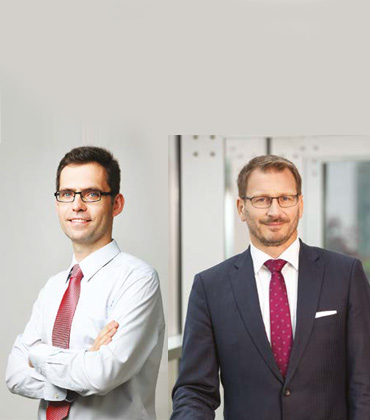
Motion Control

Martin Høgsbjerg, Senior Director of Supply Chain & Operation in Denmark, Danfoss Drives
Rubber and Tire Tech
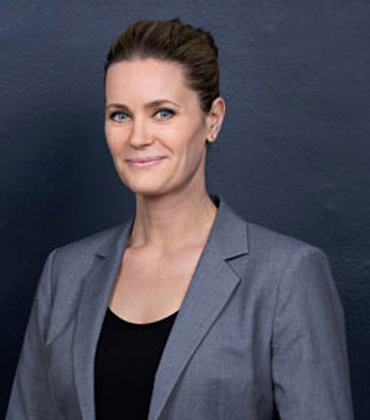
Dr. Emmy Pavlovic, CTO, Bulten Group
Material Handing
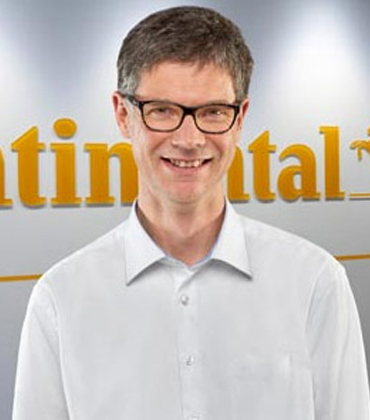
Thierry Wipff, Global Manufacturing Technology Engineering Tires, Continental Tires
Connected Worker

Maurizio Pietropaolo, Industrial Supply Chain IS Technician, Thales Alenia Space
Thermal Management

Laurent Huberty, Manufacturing Technology Team Manager, Husky Technologies

Smart Factory
Andrea Rapetti, VP Smart Factory, Datwyler Group

Motion Control Systems
Santiago Vaquero Martinez, Technology and Process Integration Director, LoxamHune
Electronics Manufacturing Services (EMS) play a critical role in global technological innovation, serving as the foundation for telecommunications, healthcare, automotive, and consumer electronics industries. Switzerland, long recognised as a hub for engineering excellence and technological advancement in Europe, remains a key player in the EMS sector. Industry trends and projections indicate a transformative period, with Switzerland poised to adapt to evolving global and domestic technological demands. Switzerland’s Strategic Position in the EMS Sector Switzerland is competitive in EMS due to its unwavering commitment to precision engineering, stringent quality standards, and a robust innovation ecosystem. The country's strong emphasis on research and development (R&D) facilitates the adoption of cutting-edge manufacturing technologies. Switzerland’s strategic location within Europe also enhances market connectivity, offering logistical advantages that support efficient EMS
Fremont, CA: Europe's manufacturing sector is undergoing a profound transformation, embracing Industry 4.0 paradigms that leverage interconnected systems, automation, artificial intelligence (AI), and the Internet of Things (IoT) to boost efficiency, productivity, and competitiveness. However, this digital leap brings with it a significantly expanded cyberattack surface, making industrial networks a prime target for increasingly sophisticated and relentless threats. Protecting these critical systems is no longer just an IT concern but a fundamental operational and strategic imperative for European manufacturers. The Evolving Threat Landscape in European Smart Manufacturing Cyberattacks pose a significant threat to smart manufacturing environments, with European factories experiencing a 53 per cent increase in incidents in the previous years. These attacks, including ransomware attacks, supply chain vulnerabilities, industrial espionage, intellectual property theft, IoT and OT vul
Innovation For The Future of Manufacturing
This integrated approach is transforming how products are built and how they perform over time. Swiss EMS providers are using digital twins to simulate production in real time, fine-tune processes before physical builds and adjust operations dynamically in response to shifting demand. These virtual tools also enable continuous performance monitoring and predictive insights that reduce downtime and enhance quality.
On the materials side, modern insulation technologies are addressing the growing complexity and energy demands of miniaturized electronics, improving safety, reliability and thermal efficiency. Aligning virtual precision with material innovation, manufacturers are advancing toward more sustainable operations, better system resilience and faster, data-informed development—outcomes that are essential in sectors like aerospace, medical technology and clean energy.
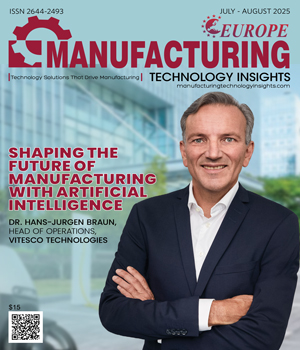
This edition of Manufacturing Technology Insights Europe explores how the convergence of smart engineering, advanced materials and digital technologies is reshaping the manufacturing landscape. It features insights from Silvano Ghilardi, head of R&D electronics at AAT Oetiker Group, who highlights the importance of hands-on, cross disciplinary leadership to drive innovation and build smarter, more connected manufacturing systems. Martin Høgsbjerg, senior director of supply chain & operation in Denmark at Danfoss Drives, emphasizes that the success of the smart factory depends on close collaboration between R&D and manufacturing. He underscores the importance of thoughtful design for automated assembly and a flexible, data-driven approach to production planning and robotics integration.
We hope this edition provides valuable perspectives to help you navigate today’s rapidly evolving manufacturing environment and spark ideas for your own innovation journey.

Manufacturing Technology Insights Weekly Brief
Be first to read the latest tech news, Industry Leader's Insights, and CIO interviews of medium and large enterprises exclusively from Manufacturing Technology Insights
