



THANK YOU FOR SUBSCRIBING

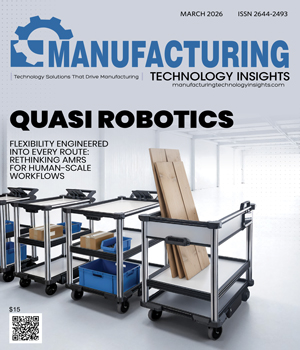
Quasi Robotics builds Autonomous Mobile Robots (AMRs) that reduce repetitive material transport for enterprises in manufacturing, life sciences, and healthcare. Its Model C2 is a cart-style platform that moves goods autonomously for on-demand, point-of-use delivery, allowing teams to reclaim hours of lost time each shift while fitting seamlessly into existing workflows. Built for fast adoption, it combines low total cost with self-serve deployment, delivering software-driven automation that augments human workers and fits into existing workflows. What core shop-floor inefficiency does Quasi Robotics directly address with autonomous cart design? The company targets a universal shop-floor pain point of excessive walking. In work-in-process flows, repetitive station-to-station transport can cost roughly three hours per shift, pulling workers away from value-added work and breaking focus. Why does Quasi Robotics emphasize point-of-use delivery over pallet-based autonomous transport systems? Because the waste is driven by the sheer number of short handoffs, the right fix is point-of-use delivery rather than bulk pallet transport. Unlike pallet-moving AMRs optimized for large moves, Quasi Robotics supports human-proximate deliveries that keep manufacturing cells supplied exactly when needed.
The prevailing narrative around artificial intelligence in manufacturing often frames automation as a means of replacing workers. ROO.AI takes a different view on the frontline. Rather than displacing people, it uses AI to augment frontline workers, making them more productive, improving safety and helping them adapt as their roles evolve. This change is crucial. Frontline workers represent nearly 80 percent of the global workforce, yet they account for only a small fraction of enterprise IT investment. As manufacturers look to bring AI into their business, they will need to embrace frontline digitalization to achieve the full benefit. AI must be integrated into both the organization’s data model and its workforce. ROO.AI addresses this gap by capturing frontline operational data that is often trapped in paper processes, tribal knowledge, or not collected at all, and supplying it directly to the organization’s intelligence layer. The platform then embeds intelligence directly into frontline work, where decisions are actually made. One of the defining characteristics of frontline work, particularly in manufacturing, is process variability. While two organizations may have the same function, such as quality inspection, the actual execution of that work differs widely depending on equipment, facility and workflow. ROO.AI is built around the principle that software must adapt to the variability of frontline work, rather than forcing frontline workers to adapt to rigid systems. The platform adapts to how work is actually performed..

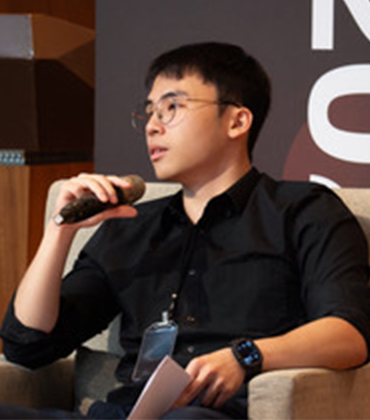
Aaron Wu, Founder and CEO
In manufacturing, simulation is meant to accelerate innovation. Too often, it does the opposite. Engineers juggle disconnected tools for design, meshing, simulation, and evaluation, turning what should be a competitive advantage into a time-consuming bottleneck. Khorium aims to change that by unifying and automating the entire simulation workflow, helping engineering teams move faster from design to production. Trained as an aerospace engineer, Aaron Wu combines expertise in physics, AI, and advanced manufacturing, spanning hyperscale simulation, CFD, and rocket propulsion. Building on this foundation, he founded Khorium, an AI-driven simulation acceleration platform for engineers designing physical products. Rather than replacing existing CAD or simulation software, the platform connects these tools into a single, coordinated system, reducing manual effort and shortening development cycles. “We do not replace workflows; we automate them end to end with AI, freeing engineers to focus on real physics, creative design, and engineering decisions,” says Wu, Founder and CEO of Khorium. Automating the Simulation Loop How does Khorium automate the simulation loop end to end? Khorium builds infrastructure to run simulations efficiently. With its platform, companies design and test parts from any device, anywhere, using a centralized cloud-based platform. This approach removes infrastructure complexity and offers a flexible, economical business model..
What happens when a bold innovator meets an outdated status quo that no one is willing to change? They rewrite the paradigm. That’s exactly what CJ Rapp did when he launched Karma Water back in 2011. “We are a solution to a problem that many consumers are don’t even realize exists,” says Rapp. The problem is a byproduct of traditional pre-mixed functional drink manufacturing, where ingredients are often hot-filled and left on shelves, exposed to varying climate conditions. Over time, this exposure steadily breaks down key ingredients like probiotics and vitamins, as it does in beverages like kombucha. This means consumers are not always getting the stated level of active ingredients. Karma Water, on the other hand, takes a bold step away from the conventional method by separating live probiotics in a hermetically sealed, patented push cap, which the consumer activates moments before drinking. This ready-to-mix design keeps sensitive ingredients separate from the water until the moment of consumption, delivering the consumer 100 percent of the intended benefits. The push cap technology works in tandem with a probiotic strain — the good bacteria Bacillus Coagulans GBI-30, 6086 (BC30®) — the beverage industry’s ‘gold standard’ probiotic. Developed by Kerry Foods, this strain is more readily bio-available than other offerings in the market. The company selected BC30® for its ability to survive the harsh digestive tract and deliver the benefits at the desired location to enhance nutrient absorption. By combining this strain with the patented push cap, Karma Probiotic Water remains stable for more than 18 months, ensuring two billion active probiotic cultures — 10 times more when compared to yogurts. It also contains six essential vitamins, all within 20 calories, providing a holistic wellness drink. The result is a stark improvement in the consumer’s gut health and immunity with every sip. Karma Probiotic Water is the go-to choice for health-conscious individuals seeking digestive support, immune-boosting vitamins, and overall wellness. The brand also offers a sustainable solution with its Karma Hydration Kits— customizable subscriptions featuring push caps paired with a reusable bottle. For those with busy lifestyles, Karma recently introduced convenient stick packs that deliver the same benefits in a more portable format.


Digit Technologies is a forward-thinking startup on a mission to transform how manufacturers and distributors operate in an industry dominated by outdated ERP systems. Its platform unifies essential processes, including production, inventory, order tracking, procurement and shipping, into one intuitive interface to deliver real-time visibility, automation and collaboration. Unlike traditional ERP systems, which are slow to deploy, costly to maintain and often rigid, Digit is built for speed, flexibility and affordability, helping manufacturers go live in days. “We built Digit to be the all-in-one system—powerful enough to handle the complexity of manufacturing, but simple enough for anyone on the shop floor to use without training,” says Dan Koukol, CEO and co-founder. For years, manufacturers have patched together spreadsheets and siloed tools, making it hard to plan ahead, spot issues early or improve efficiency. Digit’s founders knew this problem well because they had lived it. Koukol spent nearly a decade working closely with manufacturers across the U.S. as a consultant, helping untangle bottlenecks and improve operational performance. Driven by a passion for hands-on problem-solving, he joined a struggling injection molding manufacturing business as the CEO and turned it profitable. In both roles, it became clear that no modern software tools were truly built for the realities of the factory floor. In 2021, Koukol and his co-founders launched Digit with a simple but ambitious idea: to build the system they always wished existed—a modern operating system for manufacturing, built by manufacturers, not just engineers.
Industrial Automation

Greg Thompson, Sr. Director of Operations - CNC, Protolabs [NYSE:PRLB]
Electronics Manufacturing

Robert Yancey, Business Development Director, Hexcel Corporation
Industrial Automation

Don McCartney, Global VP of Digital Operations, Oshkosh Corporation
Advanced Materials

Kelly Dodds, Sr. Director & Advanced Manufacturing Tech Director, Advanced Manufacturing, Modernization & Technology, Raytheon Intelligence & Space
Smart Factory
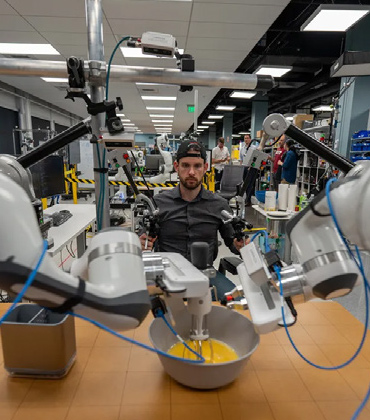
Yongyao (Max) Cai, Director of Engineering, TE Connectivity

Electronics Manufacturing
Derek McKenney, Vice President, Manufacturing Operations, Puritan Medical Products

Industrial Automation
Jeff Tadin, Principal Engineer, East West Manufacturing
Connected worker platforms enable real-time decision-making, empowering frontline workers with data and improving safety, efficiency, and responsiveness across modern factory operations.
The autonomous mobile robotics sector is maturing through flexible deployment, intelligent integration, and data-driven operations that support resilient, scalable industrial performance.
Where Manufacturing Technology Proves Its Value
This edition of Manufacturing Technology Insights focuses on solutions embedded directly into daily execution, where software, robotics, and connected systems function as practical infrastructure rather than side projects. Across facilities, leaders are prioritizing tools that deliver repeatable gains, integrate quickly, and support the people doing the work.
Leading the issue, Quasi Robotics, recognized as Top Autonomous Mobile Robots Company of the Year 2026, addresses a persistent inefficiency on the shop floor: time lost to repetitive material movement. Its autonomous cart systems deploy rapidly, operate alongside teams, and reduce non value added motion, enabling faster handoffs and higher labor utilization without costly redesigns.
At the engineering layer, Khorium, ranked Top 3D Simulation Modeling Platform 2026, streamlines fragmented simulation workflows by coordinating design, meshing, execution, and evaluation. The platform shortens development cycles while preserving engineers’ control over physics driven decisions and design integrity.
On the frontline, ROO AI, awarded Top Manufacturing Connected Worker Platform 2026, embeds training, guidance, and safety directly into the flow of work, strengthening consistency, quality, and compliance without adding procedural burden.
Industry leaders echo this execution first mindset. Yongyao Cai of TE Connectivity emphasizes extracting more value from existing assets through intelligent integration, while Kelly Dodds of Raytheon Intelligence & Space highlights incremental pilots that build sustainable capability.
Together, these stories show that durable manufacturing advantage comes from focused integration and disciplined execution, where technology proves its value in everyday operations.

Manufacturing Technology Insights Weekly Brief
Be first to read the latest tech news, Industry Leader's Insights, and CIO interviews of medium and large enterprises exclusively from Manufacturing Technology Insights
