


THANK YOU FOR SUBSCRIBING

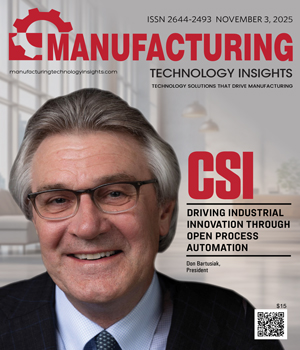
CSI is leading a tangible shift in industrial control systems. It specializes in open standards-based architecture built on the Open Process Automation Standard (O-PASTM) that replaces closed, vendor-specific platforms. By participating in the Coalition for Open Process Automation (COPA), CSI brings COPA Control System, the first commercially available O-PAS based control system that offers modularity, interoperability and cybersecurity. The COPA Control System integrates OT and IT components and is tailored to each site’s specific needs. By removing vendor lock-in, lowering the total cost of ownership and strengthening cybersecurity, CSI enables the adoption of technologies such as fast-cycle-time Model Predictive Control and artificial intelligence. In addition, CSI supports clients with a full range of services, including consulting and training, specialized engineering services and process control software that help organizations design, deploy and scale O-PAS systems effectively. “The significance lies in reducing the risk of new technology adoption. Customers can be confident they are not engaging with untested or experimental solutions, as the products involved are already proven and supported by established suppliers,” says Don Bartusiak, President. WHY OPEN SYSTEMS MATTER In 2009, ExxonMobil faced an estimated $5 billion undertaking to upgrade its refining and chemical control systems; these were basically non-return projects. After discussions with major suppliers, the team concluded it did not matter which vendor the company purchased from, since the proprietary systems were not interoperable. The O-PAS Standard defines an open architecture that treats control functions as plug-and-play components. This enables targeted upgrades rather than costly full-system replacements and allows operators to select the most effective solution for each need. CSI and its partners are putting this approach into practice by integrating field-proven hardware and software with the open architecture, verifying conformance and interoperability through independent testing and delivering site-specific systems that evolve without vendor lock-in.
Ujigami is making significant strides in the Manufacturing Execution System (MES) space by offering a comprehensive and efficient solution that prioritizes real-time coordination and control, complete traceability and robust reporting. With over 25 years of experience, the company has successfully developed and widely deployed a dynamic active control approach to manufacturing. In its early days, MES was seen as a tool to coordinate, control, and report on the manufacturing processes. However, according to Edward Dickson, CEO of Ujigami, the industry’s view of MES has devolved to simple data collection and monitoring. “But we have retained our focus on coordination and active real-time control, ensuring that the Ujigami software is not just collecting data, but actively managing and improving the processes as they occur,” explains Dickson. Ujigami’s unique approach is built on its ability to handle real-time data processing and rules based decision making with minimal latency. Unlike most other MES solutions that respond to data inputs in seconds, Ujigami’s system works in milliseconds, making it capable of controlling processes at a speed that drives tangible productivity gains. This real-time capability allows Ujigami to take on functionality typically programmed in PLCs. Ujigami’s MES solution can be configured (no programming required) to replace the logic embedded within PLCs, simplifying machine control and eliminating unnecessary complexities while improving machine speed, efficiency and uptime. Ujigami’s active controls are easily configured by a technical employee with no knowledge of programming. Ujigami builds on the familiar tools of process flow diagrams, control plans and work instructions. “If someone can create a work instruction, they can configure Ujigami. But instead of being a static document that few people reference, Ujigami takes active control of the manufacture of every part to ensure it is produced to specification” states Dickson. “Ujigami is like having your best supervisor continuously working directly with every machine and operator to ensure all tasks and processes are completed to specification. And if a problem arises, Ujigami automatically invokes containment and corrective actions.”


Advances in manufacturing technologies have significantly simplified the process of building most electronic products. Manufacturing devices that incorporate radio frequency (RF) technology, however, present a particular set of challenges, the resolution of most of which begins after the devices are assembled, when secure connectivity, precise RF calibration, and unique digital credentials must be managed in interference-heavy environments. These hurdles demand an expert hand to resolve—one with skill and experience that goes beyond standard manufacturing expertise. CA Engineering (CAE) steps in to provide that expert hand, guiding clients and manufacturers through the additional layers of testing, calibration, and security that make wireless devices perform reliably in real-world applications. Over the past several years, CAE has managed QA and testing for nearly two million wireless devices. Its proprietary CAIMAN™ system serves both as a quality assurance framework and a management platform, providing clients with full oversight of their product across the entire production cycle. “The CAIMAN™ system has evolved over more than 15 years. A dedicated team of engineers, with some working on it full-time for over a decade, are continuously refining it to meet the growing demands of wireless product manufacturing,” says Jim Stout, CTO. Through technology built for accelerating manufacturing tests, CAE ensures complex electronics, like RF-integrated PCBAs, move from production to performance faster and more reliably. The company enables manufacturing speed by crafting custom test fixtures and providing best-practice recommendations that ensure consistent high-quality output. These fixtures and manufacturing processes are fully integrated into the CAIMAN™ system, providing a holistic approach to ensure that every device meets rigorous operational, security and performance standards, giving clients confidence in both the reliability and readiness of their products. While the initial focus is on manufacturing speed and quality, CAE goes further by tackling one of the trickiest challenges in wireless devices: security. Vulnerabilities in wireless communication devices extend beyond the manufacturing site, into the silicon and individual components themselves. Most contract manufacturers focus primarily on IPC-A-610 standards or ISO 9001 quality inspection. CAE, through the use of its CAIMAN™ system, confirms that the manufacturing quality of each device satisfies these standards by, among other things, measuring, calibrating and testing each device’s transmitters and receivers. But the system goes far beyond that, helping to ensure that each device also receives correctly signed firmware, with appropriate MAC IDs, tokens, and keys securely installed, none of which is addressed by IPC-A-610 or ISO 9001. The system also enables the registration of devices with cloud services (if needed), permits real-time management of all test parameters, and records and maintains the results of each test that is run, providing clients with complete visibility and control.
Industrial Automation

Greg Thompson, Sr. Director of Operations - CNC, Protolabs [NYSE:PRLB]
Industrial Automation

John Connell, Vice President of SLI Products Group, Crown Battery Manufacturing
Industrial Automation

Don McCartney, Global VP of Digital Operations, Oshkosh Corporation
Industrial Automation

Jeff Tadin, Principal Engineer, East West Manufacturing
Industrial AI

Dashiell Sklenar, Product Manager - Generative AI, Weyerhaeuser
Lean Manufacturing

Tats De, PhD, Senior Director of Engineering, Daikin Comfort
Industrial Automation

Erin Byrne, Segment CTO and VP, Industrial Solutions Segment, TE Connectivity

Industrial Automation
Ron Gulbransen, Product Manager / Business Unit Manager - Auxiliaries Advanced Plastics Processing Technologies, Milacron

Industrial Automation
Larry Saidman, Chief Technologist - R&D, Nordson Corporation
The Industrial Internet of Things (IIoT) enhances manufacturing by integrating intelligent systems, requiring a digitally fluent workforce that is upskilled in data literacy and strategic leadership.
The manufacturing sector is shifting focus to environmental sustainability, integrating emissions intelligence into operations through advanced technologies, optimizing productivity while minimizing carbon impact.
The New Nerve System of Smart Manufacturing
Across the U.S., factories are adopting cloud-based Manufacturing Execution Systems that bring real-time visibility from the shop floor to the supply chain. Integrated with ERP and quality systems, these platforms track output, performance and compliance with precision, turning operations into live sources of insight.
Automation is advancing in parallel. Robots, conveyors and control units are no longer isolated assets but synchronized elements within digital production ecosystems. With adaptive controls, analytics and AI-driven maintenance, automation is becoming predictive and self-optimizing.
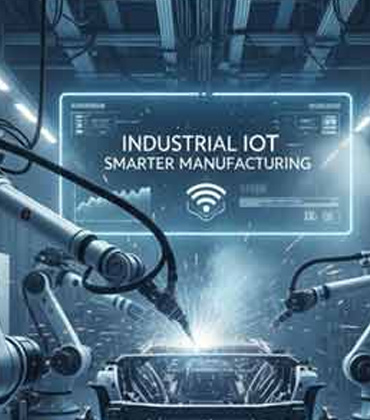
Industrial IoT completes this layer of transformation by embedding sensors, connectivity and edge intelligence into every process. Machines communicate continuously, enabling the creation of digital twins, predictive quality and energy optimization. Together, these technologies are transforming factories into adaptive systems that can learn and respond independently.
Market outlooks reflect this acceleration, with the global Manufacturing Execution System market projected to reach $41.3 billion by 2029, growing at a rate of 16 percent CAGR, the U.S. manufacturing automation market is estimated to reach $87.5 billion by 2030 at 10.6 percent CAGR and the U.S. Industrial IoT market is forecasted to reach $568.9 billion by 2033, growing at 17.1 percent CAGR.
This edition highlights leaders advancing intelligent manufacturing. Tats De of Daikin Comfort shares how hybrid development aligns agile software with traditional production to boost innovation. Erin Byrne of TE Connectivity discusses how sensor intelligence and IoT are reshaping automation and healthcare.
We also spotlight CSI, a pioneer in open industrial automation. Led by Don Bartusiak, the company delivers O–PAS–compliant control systems that replace closed architectures with modular, interoperable platforms, helping manufacturers reduce ownership costs, enhance cybersecurity and future-proof their complex operations.
We hope these insights help manufacturing leaders, automation experts and industrial innovators navigate the U.S. shift toward digitally integrated operations.

Manufacturing Technology Insights Weekly Brief
Be first to read the latest tech news, Industry Leader's Insights, and CIO interviews of medium and large enterprises exclusively from Manufacturing Technology Insights
