

THANK YOU FOR SUBSCRIBING
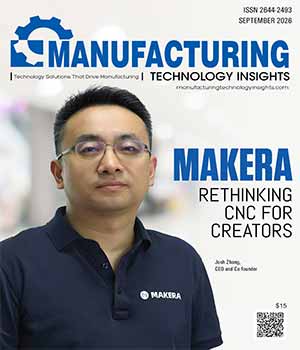
Makera is reimagining CNC machining for a new generation of creators. Born from the belief that these powerful manufacturing tools should be as accessible as 3D printers, Makera delivers industrial-grade precision in a compact, desktop format, putting advanced capabilities into the hands of every maker. The idea took root nearly a decade ago when the founders were immersed in the world of drones, robotics and electronics. They were makers themselves, constantly experimenting with their ideas. But again and again, they hit the same wall. They needed precise, custom parts, and the available tools didn’t cut it. Industrial CNC machines were too expensive and overkill for small-scale projects. While affordable, desktop alternatives were slow, cumbersome, and limited in capability. “We wanted a machine that’s fast, precise and easy to use,” says Josh Zhang, CEO and co-founder. “We couldn’t find one, so we built one.” What was conceptualized as a tool quickly evolved into a full-blown vision; to remove the barriers around CNC technology and give more people the power to make high-quality products. They set out to combine the accessibility and size of desktop machines with the power and reliability of industrial systems, eliminating clunky software, manual tool changes, and steep learning curves.
As products grow increasingly intricate and time-to-market becomes a critical determinant of competitive viability, SAP partner ILC is quietly emerging as a powerhouse in Product Lifecycle Management (PLM). At its core, ILC addresses a fundamental conundrum that global manufacturers face: managing massive configuration complexity without compromising speed, cost, or scalability. Its answer is the Product Variant Concentrator, an easy-to-use flagship solution for companies grappling with thousands of ever-evolving product configurations. This offering is built on a distinctive philosophy of being “fully SAP-embedded” without requiring code. It operates without disrupting clients’ existing SAP architecture and eliminates the need for middleware, third-party connectors, or workaround integrations. Such seamless native integration unlocks vast possibilities, streamlining data flow between engineering and production. It minimizes friction, delays, errors, and overhead, ultimately maximizing profits through better resource utilization and enhanced productivity. “Our solution combines a preconfigured reference process with open customization. You won’t find anything else like it on the market. Clients don’t have to choose between standardization and flexibility; they get both,” says Markus Heise, CEO of ILC North America. This balance between structure and adaptability has proven valuable for manufacturers under pressure to innovate rapidly. One lighting manufacturer, for instance, previously struggled to manage just 300 product variants due to the manual burden placed on its engineering team. After deploying ILC’s PLM suite, that same team handles over 12,000 variants with faster turnaround and reduced costs. More than just achieving control, the client gained strategic agility, being able to respond faster to market demands without expanding headcount or compromising quality.


Mike McGraw, President
Hope Industrial Systems equips factory floors with rugged, precision-engineered monitors and touchscreens, purpose-built to withstand the demanding industrial environments. Every unit is designed and hand-assembled in Atlanta, Georgia, under 100 percent private ownership. This independence ensures complete control over quality, service and customer experience. By focusing exclusively on industrial displays, Hope Industrial delivers expert craftsmanship and dependable performance. Each monitor is UL-certified, carries a NEMA 4X rating, and has been field-proven to operate reliably for over 250,000 hours. They are also backed by the industry’s longest standard warranty of five years, providing customers with peace of mind even in the harshest factory conditions. “Our success comes down to a single principle of creating a positive customer experience every time,” says Mike McGraw, president. That philosophy has earned the company a reputation for reliability, with more than 90 percent of its business coming from repeat customers. With installations spanning seven continents and a global distribution network, Hope Industrial’s products are trusted worldwide. They serve industries as diverse as aerospace, automotive, food and beverage, medical, transportation, and energy. The durability of these monitors makes them equally effective in amusement parks, pharmaceutical cleanrooms or even on ships navigating Antarctic waters. Regardless of the setting, clients benefit from equipment that is built to last and tailored for industrial performance. The product line reflects the focus on dependability. Displays range from 12-inch to 23.8-inch widescreens, designed for flexibility across industrial environments. Options include panel-mount monitors for integration into control panels, universal-mount models for walls, pedestals, posts or columns, and rack-mount monitors for server rooms. Touchscreens are available in resistive or multi-touch projected capacitive technology. Accessories such as keyboards, workstation mounts, protective PC enclosures and extended cabling enable clients to configure complete, resilient setups. Quality is reinforced by the company’s distinctive approach to manufacturing. Each monitor is hand-assembled in a dedicated cell, where a single technician builds the unit from start to finish. This craftsmanship-driven model creates a sense of pride and accountability in every product shipped. That same dedication to craftsmanship extends to the way customers are served. A streamlined direct-sales model eliminates intermediaries, creating direct connections with end users, OEMs and systems integrators for a faster, more personalized experience.
Industrial Automation

Brian Lieser, EVP Industrial Automation, Belden
Lean Manufacturing

Barrett Hopper, Director of Operations, Americas Region, MKS Instruments – Materials Solutions Division
Electronics Manufacturing
Eric Huang, Engineering Manager, Alcon
Manufacturing IT

Joel Gardner, Senior Manufacturing Technology Specialist, 3M
Industrial AI
Andrew Splawn, Operations/Multi-site Plant Manager, Medline Industries

Prototype Engineering
Jason Bradley, Director Of Engineering, Mueller Water Products [NYSE: MWA]

Smart Factory
Paul Guerrier, Manufacturing Engineering Manager, Moog Inc
Connected worker platforms integrate workflows to optimize manufacturing efficiency, workforce productivity, safety, and shop-floor performance.
Global manufacturing is shifting from offshoring to reshoring, driven by technology, supply chain risks, and protectionism, creating uneven economic and labor impacts.
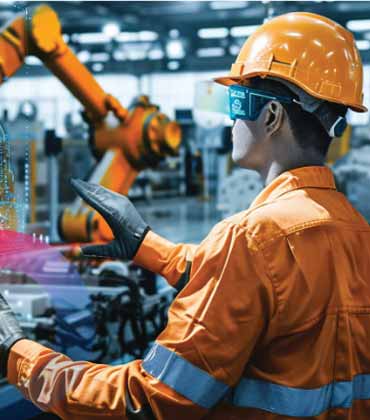
Smart Factories Rising: The Future of Industrial Innovation
Next, cloud-native PLM ecosystems are evolving into fully connected digital threads. These platforms integrate with digital twins, IoT data, and simulation tools, allowing companies to design, test, and validate products virtually before production. This reduces timeto-market, enhances traceability, and supports mass customization across industries.
Then, intelligent manufacturing operations platforms are transforming workflow management. With AI-driven scheduling, real-time analytics, and low-code dashboards, these systems provide complete visibility across production lines. The result is adaptive manufacturing, where operations continuously improve based on live data, boosting efficiency and throughput.
At the same time, Industrial Monitor and Touch Screen Manufacturers are enhancing human-machine interaction. These solutions enable real-time data visualization and intuitive controls, ensuring faster and more accurate decision-making in demanding industrial environments.
Sustainability is also becoming a core focus. Manufacturers are using data-driven insights to reduce waste, optimize energy consumption, and support circular production models. ESG goals are now integrated into operations, making sustainability both measurable and strategic.
Together, these trends are creating a connected, data-driven manufacturing ecosystem built for agility and resilience. Production systems are no longer static—they continuously learn, adapt, and improve with every cycle.
This transformation is supported by platforms like Accur8 Software, which streamline data integration, and organizations such as EnPro Industries, showcasing real-world impact.
In this edition of Manufacturing Technology Insights, we highlight innovators driving this change and shaping a smarter, more efficient, and future-ready manufacturing landscape.

Manufacturing Technology Insights Weekly Brief
Be first to read the latest tech news, Industry Leader's Insights, and CIO interviews of medium and large enterprises exclusively from Manufacturing Technology Insights
