Research | Manufacturing Technology Insights

Manufacturing Intelligence Solutions: Turning Data Into Factory-Wide Coordination

Manufacturing Intelligence Solutions: Turning Data Into Factory-Wide Coordination

Manufacturing leaders have spent years investing in connected equipment, industrial sensors and automation technologies. Yet many facilities still struggle to translate those investments into consistent plant-wide performance. Data often remains trapped within individual machines, production cells or software applications, creating islands of visibility rather than a coordinated manufacturing environment. The challenge is no longer collecting information. It is turning that information into timely decisions that support quality, throughput and responsiveness without adding complexity for operators.
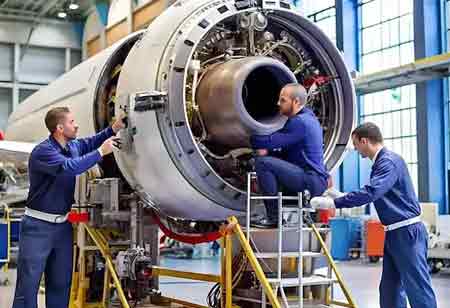

Precision as a Competitive Lever in Advanced Manufacturing Systems

Precision as a Competitive Lever in Advanced Manufacturing Systems

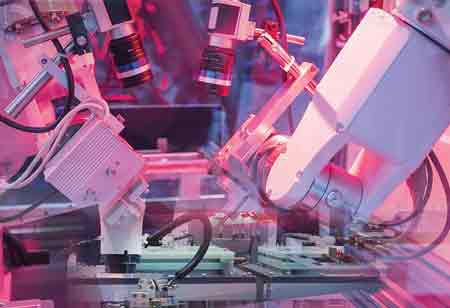
Precision measurement and control technologies have moved from being supporting components to defining factors in manufacturing competitiveness. Executives evaluating these systems are no longer focused solely on accuracy in isolation; they are assessing how precision translates into throughput stability, reduced waste and long-term production confidence. In sectors such as aerospace, medical devices and semiconductor fabrication, even minor deviations can disrupt yield, introduce compliance risk or erode margin. This places increasing emphasis on technologies that deliver consistent performance under real production conditions rather than controlled environments.

Smart Manufacturing Intelligence Drives Industrial Operational Transformation

Smart Manufacturing Intelligence Drives Industrial Operational Transformation

Manufacturing intelligence solutions are transforming industrial environments by enhancing visibility across complex production systems. Real-time data insights are facilitating faster and more accurate operational decisions. Connected analytics platforms help detect irregularities in processes at an early stage, allowing manufacturers to maintain consistent output quality and minimize interruptions during high-volume operations.

Accelerating Throughput in Robotic Palletizing Systems

Accelerating Throughput in Robotic Palletizing Systems

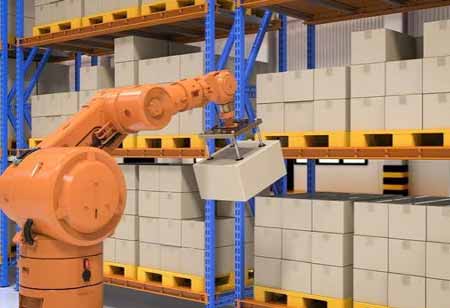
Manufacturing leaders evaluating robotic palletizing solutions face a persistent tension between automation gains and disruption to production continuity. Traditional deployments often bring extended installation timelines, complex commissioning cycles, and operator dependency. These factors slow adoption across plants. As labor availability tightens and production variability increases, palletizing systems are no longer judged only by throughput. Instead, their value depends on how quickly they can be introduced, adapted, and reliably operated within existing workflows.

Market Trends in Precision Measurement: Meeting Evolving Industry Demands

Market Trends in Precision Measurement: Meeting Evolving Industry Demands

The precision measurement and control technology market is rapidly advancing due to the increasing demand for higher accuracy, operational efficiency, and intelligent system integration. As industries continue to adopt automation, digitalization, and sustainability-focused practices, these technologies have become essential for maintaining operational excellence and meeting regulatory requirements. Its role is expanding from basic monitoring tools to integrated systems that support real-time decision-making, process optimization, and long-term performance improvements.

When Simulation Speed Determines Design Reality

When Simulation Speed Determines Design Reality

Three-dimensional simulation modeling has become a bottleneck rather than an advantage for many engineering organizations. Product teams are under pressure to compress design cycles, explore more alternatives and move concepts into manufacturing without adding headcount or software sprawl. Yet simulation workflows remain fragmented. Design, meshing, solver setup and result evaluation often sit across disconnected tools, each demanding manual intervention from scarce specialists. Time is lost not in physics or insight, but in preparation, translation and rework.

Automation Solutions: Transforming Modern Robotic Palletizing Operations

Automation Solutions: Transforming Modern Robotic Palletizing Operations

Robotic palletizing and automation solutions occupy a critical position within modern industrial operations, where the movement and arrangement of goods must align with both speed and accuracy. These systems extend beyond simple mechanization, representing a coordinated integration of robotics, control systems, and process design that collectively shape how materials flow through production and distribution environments. Palletizing, once a repetitive manual task, has evolved into a sophisticated function where consistency, adaptability, and throughput are carefully balanced.

Manufacturing Process Systems That Reward Precision Over Speed

Manufacturing Process Systems That Reward Precision Over Speed

Manufacturing technology leaders face a familiar issue. Production systems are expected to deliver higher throughput while holding tighter tolerances across more complex material stacks and stricter compliance regimes. In aerospace, transportation and advanced electronics, the margin for error has narrowed to the point where process design matters as much as the tools themselves. Conventional approaches that prioritize procurement speed or unit cost often fail once variability, ergonomics and long-term quality enter the equation.

Smart Solutions: The Integration of Autonomous Mobility in the Industrial Landscape

Smart Solutions: The Integration of Autonomous Mobility in the Industrial Landscape

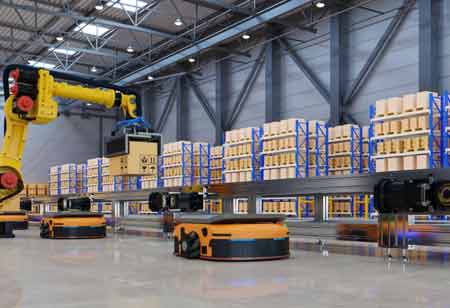
The autonomous mobile robotics sector is settling into a period of commercial realism. Early experimentation has given way to disciplined deployment, where performance, reliability and operational fit determine success. Across logistics hubs, manufacturing floors and distribution centers, robots are now evaluated as long-term infrastructure rather than novelty investments. This shift reflects broader industrial priorities shaped by labor volatility, rising service expectations and the need for facilities to adapt without structural overhaul. The conversation has moved from capability to continuity, and the market is responding with solutions designed for endurance.

Elevating Industries: The Power of Advanced 3D Simulation Technology

Elevating Industries: The Power of Advanced 3D Simulation Technology

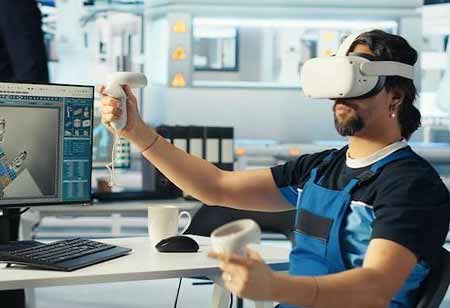
The development of digital technologies has positioned 3D simulation modeling platforms as a critical foundation for innovation across industries. From advanced manufacturing and healthcare to aerospace and smart infrastructure, these platforms enable organizations to visualize, test, and optimize complex systems in virtual environments before deployment in the real world. By combining computational accuracy with immersive visualization, 3D simulation modeling platforms reduce risk, accelerate development cycles, and enhance decision-making.

Maximizing ROI Through the Architecture of Information Flow

Maximizing ROI Through the Architecture of Information Flow

For decades, the Return on Investment (ROI) of manufacturing process systems was calculated through a relatively linear lens: capital expenditure versus unit output. If a machine could produce widgets 10 percent faster, the ROI was simple math. Today, the highest ROI is not derived merely from the hardware’s physical speed, but from the sophistication, velocity, and granularity of the information flow that governs it.