

THANK YOU FOR SUBSCRIBING
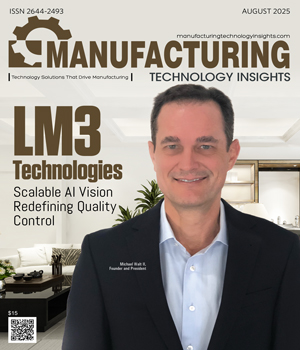
LM3 Technologiesis redefining what’s possible in manufacturing inspection by delivering advanced, integrated AI vision systems that bridge the gap between reliability, traceability and full plant-floor integration. From catching surface-level cosmetic defects to orchestrating robot-guided inspections and closing gaps in legacy systems, LM3 is leading a new wave of production-ready, scalable AI vision. Founded in 2009 by Michael Walt II, LM3 Technologies emerged from decades of expertise in automotive electrical and seat system testing. Drawing from his experience building full-seat validation platforms and working alongside the world’s largest automotive OEMs, Walt founded LM3 with the goal of building smarter inspection tools for a wider range of industries. “Our goal has always been to create a practical, scalable solution that smaller and mid-sized manufacturers could actually implement—without sacrificing performance,” says Michael Walt II, founder and president. That philosophy led to the creation of QC Hero, LM3’s powerful AI training pipeline launched in 2017. Built for manufacturers, QC Hero enables companies to train defect detection models from their own part images and deploy them in hours, not weeks. The platform is cloud-based, leveraging Google Cloud TPUs to reduce training cycles from 24 hours to under two. At just $700 per model, QC Hero offers a dramatic cost advantage over enterprise solutions that start at $50,000+ and often lock customers into complex licensing models. “We created QC Hero and designed PAQi because we saw firsthand how difficult it was for manufacturers to get AI into production. Either the tools were too expensive, too slow, or just didn’t integrate with the rest of the plant. We wanted to make AI inspection something that actually works for real operators and engineers on the floor,” says Walt. LM3’s AI models run directly on PAQi: a model- and camera-agnostic, edge-deployed controller that serves as the heart of the LM3 ecosystem. PAQi can run up to six cameras, includes local storage via SQL and features built-in integration with industrial protocols like PROFINET, Modbus and Ethernet/IP. This architecture allows LM3 systems to fully integrate into existing PLCs, MES systems and line controls without custom middleware—a major differentiator from many vision companies that provide only standalone results or lack traceability.
As products grow increasingly intricate and time-to-market becomes a critical determinant of competitive viability, SAP partner ILC is quietly emerging as a powerhouse in Product Lifecycle Management (PLM). At its core, ILC addresses a fundamental conundrum that global manufacturers face: managing massive configuration complexity without compromising speed, cost, or scalability. Its answer is the Product Variant Concentrator, an easy-to-use flagship solution for companies grappling with thousands of ever-evolving product configurations. This offering is built on a distinctive philosophy of being “fully SAP-embedded” without requiring code. It operates without disrupting clients’ existing SAP architecture and eliminates the need for middleware, third-party connectors, or workaround integrations. Such seamless native integration unlocks vast possibilities, streamlining data flow between engineering and production. It minimizes friction, delays, errors, and overhead, ultimately maximizing profits through better resource utilization and enhanced productivity. “Our solution combines a preconfigured reference process with open customization. You won’t find anything else like it on the market. Clients don’t have to choose between standardization and flexibility; they get both,” says Markus Heise, CEO of ILC North America. This balance between structure and adaptability has proven valuable for manufacturers under pressure to innovate rapidly. One lighting manufacturer, for instance, previously struggled to manage just 300 product variants due to the manual burden placed on its engineering team. After deploying ILC’s PLM suite, that same team handles over 12,000 variants with faster turnaround and reduced costs. More than just achieving control, the client gained strategic agility, being able to respond faster to market demands without expanding headcount or compromising quality..


With a legacy of over fifty years, Flex (NASDAQ: FLEX) has evolved beyond its roots into a premier end-to-end manufacturing partner, driven by a bold vision to create products that add value and enhance lives. From its humble origins in Silicon Valley, the company has transformed into a global powerhouse in manufacturing, partnering with market-leading brands across diverse industries. Its innovative manufacturing solutions help design, build, deliver, and manage products that improve the world. At the core of Flex’s success are its employees—makers, problem-solvers, and leaders who bring passion and expertise to their roles. This values-driven, high-performing culture fosters an environment where extraordinary outcomes are the norm. With a presence in 30 countries, the workforce is united by a commitment to responsible and sustainable operations. Its global team supports customers throughout every product lifecycle stage, from cutting-edge design and engineering to robust supply chain management and comprehensive postproduction services. Committed to building a world where innovation and sustainability go hand in hand, Flex provides growth opportunities for employees. In a similar vein, the CEO of Flex, Revathi Advaithi, advocates a culture that values education and lifelong learning, ensuring individuals are equipped with the skills needed to thrive in the factories of the future. She articulates, “Prioritizing the people who work in manufacturing leads to greater business success and positive global impacts.” Flex’s commitment to social and environmental responsibility is evident through its targeted programs and practices. By integrating sustainable practices into its operations, Flex reduces carbon emissions, conserves resources, minimizes waste, meets regulatory requirements, and sets new industry standards. From Silicon Valley Beginnings to Global Leader Flex’s journey began in 1969 when Joe and Barbara-Ann McKenzie founded Flextronics (now Flex). Starting with circuit boards for Silicon Valley’s burgeoning tech companies, they transformed manufacturing by automating production, ensuring faster, more reliable, and cost-effective products. In the 1980s, Flextronics expanded into contract manufacturing, pioneering vertical integration to optimize global supply chains. By 1994, Flextronics had returned to public markets with a vast global footprint and top-tier clients in the information and communications technology industry. Building on this momentum, the acquisition of Solectron in 2007 further enhanced Flextronics’ capabilities. This evolution culminated in 2015 with the rebranding to Flex, marking its transformation into a comprehensive provider of product lifecycle services. Flex’s commitment to innovation is highlighted by its investments in advanced manufacturing technologies, including automation, robotics, digitization, and additive manufacturing. These advancements ensure greater efficiency, quality, and sustainability by optimizing production processes, reducing downtime, and increasing throughput. In addition, by integrating artificial intelligence (AI) and advanced analytics, the firm proactively maintains its equipment, guaranteeing topquality outcomes for customers.
Industrial AI

Brendan J. Chan, Ph.D., Sr. Chief Engineer – Autonomy and Active Safety, Oshkosh Corporation
Industrial AI

Brendan J. Chan, Ph.D., Sr. Chief Engineer – Autonomy and Active Safety, Oshkosh Corporation
Connected Worker

Pete Hogan, Senior Vice President of Information Technology, Compana Pet Brands
Industrial Automation

Massimo Sapone, SVP Distribution Planning, EssilorLuxottica
Connected Worker

Courtney Abraham, Chief Human Resources Officer, Current Lighting

Industrial AI
Dr. Paul Guerrier, Manufacturing Engineering Manager, Moog

Industrial AI
Hao Dinh, Vice President Of Technology, Enpro
SAP PLM drives innovation in manufacturing by integrating product data management, enhancing collaboration, and utilizing real-time insights for improved efficiency and sustainability throughout the product lifecycle.
Inside the Tech Arsenal Redefining Modern Manufacturing
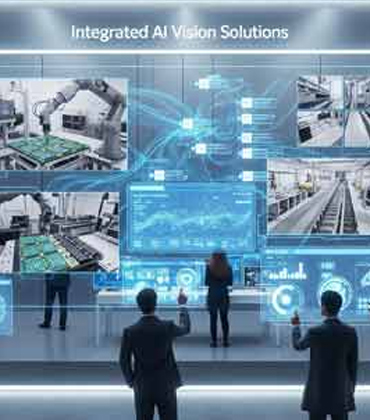
First up, Integrated AI Vision is no sci-fi, it’s now factory-floor reality. Manufacturers deploy smart optics plus neural nets at scale to flag imperfections in microseconds, power predictive maintenance, and drive savage gains in yield. Think zero-defect goals, and real-time vision systems making them possible.
Next, SAP PLM has evolved into a high-impact product lifecycle powerhouse, tying cloud-hosted design management to IoT platforms and digital engineering pipelines. Companies lean into this to lock product traceability, squeeze design cycles, and rapid-fire launch new variants. It’s the backbone fueling agile innovation in aerospace, automotive, and advanced machinery.
Then, Manufacturing Workflow Software is everywhere—from small machine shops to sprawling plants—harmonizing everything. Platforms now bundle AI in scheduling, digital-twin testing, low-code dashboards, and real-time KPI feeds. The outcome? Shop-floor chaos gets tamed, throughput rises, and efficiency becomes a living metric.
Together, these three pillars form a manufacturing tech stack that’s hyper-connected, fiercely data-driven, and built for rapid scaling under disruption. They are transforming production into a smarter, more adaptive ecosystem—one that learns from every cycle, improves on the fly, and thrives in an era where speed, precision, and flexibility determine competitive advantage.
This transformation is amplified by enablers like Accur8 Software, which accelerates clean data integration, and EnPro Industries, whose engineered products and operations showcase the real-world payoff of advanced manufacturing tech.
In this special edition of Manufacturing Technology Insights, we spotlight the innovators redefining industrial performance. These technologies and companies are paving the way for a future where manufacturing is smarter, leaner, and built to thrive under constant disruption. The race is on and those who embrace this digital toolkit will set the pace for the decade ahead.

Manufacturing Technology Insights Weekly Brief
Be first to read the latest tech news, Industry Leader's Insights, and CIO interviews of medium and large enterprises exclusively from Manufacturing Technology Insights
