

THANK YOU FOR SUBSCRIBING
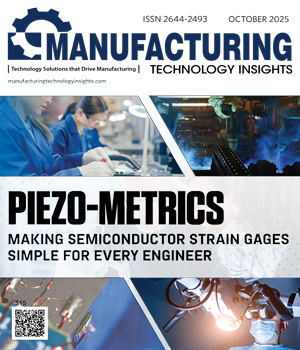
For decades, metal foil strain gauges have been the standard in strain measurement. They are dependable, well-understood, and widely used across industries. Yet in high-accuracy, high-precision environments, their limitations create blind spots. Semiconductor strain gages change that equation. Delivering far higher electrical outputs than metal foil gauges, at a fraction of the size, they detect strains that traditional technology can’t capture. So why isn’t every lab and production line using them? Accuracy and precision often come with tradeoffs. Semiconductor strain gages are highly sensitive to strain and temperature, and their installation requires exacting techniques. A single misstep can compromise the integrity of the entire sensor. Performance is exceptional but only when the gage is applied correctly. Piezo-Metrics has spent more than 40 years solving this challenge. The company didn’t just produce semiconductor strain gages—it engineered a system around them. Piezo-Metrics’ products can deliver up to 60 times the output of metal foil gauges, measuring the imperceptible in aerospace engines, medical implants, and industrial systems where accuracy is non-negotiable.
Mike McGraw, President
Hope Industrial Systems equips factory floors with rugged, precision-engineered monitors and touchscreens, purpose-built to withstand the demanding industrial environments. Every unit is designed and hand-assembled in Atlanta, Georgia, under 100 percent private ownership. This independence ensures complete control over quality, service and customer experience. By focusing exclusively on industrial displays, Hope Industrial delivers expert craftsmanship and dependable performance. Each monitor is UL-certified, carries a NEMA 4X rating, and has been field-proven to operate reliably for over 250,000 hours. They are also backed by the industry’s longest standard warranty of five years, providing customers with peace of mind even in the harshest factory conditions. “Our success comes down to a single principle of creating a positive customer experience every time,” says Mike McGraw, president. That philosophy has earned the company a reputation for reliability, with more than 90 percent of its business coming from repeat customers. With installations spanning seven continents and a global distribution network, Hope Industrial’s products are trusted worldwide. They serve industries as diverse as aerospace, automotive, food and beverage, medical, transportation, and energy. The durability of these monitors makes them equally effective in amusement parks, pharmaceutical cleanrooms or even on ships navigating Antarctic waters. Regardless of the setting, clients benefit from equipment that is built to last and tailored for industrial performance. The product line reflects the focus on dependability. Displays range from 12-inch to 23.8-inch widescreens, designed for flexibility across industrial environments. Options include panel-mount monitors for integration into control panels, universal-mount models for walls, pedestals, posts or columns, and rack-mount monitors for server rooms. Touchscreens are available in resistive or multi-touch projected capacitive technology. Accessories such as keyboards, workstation mounts, protective PC enclosures and extended cabling enable clients to configure complete, resilient setups. Quality is reinforced by the company’s distinctive approach to manufacturing. Each monitor is hand-assembled in a dedicated cell, where a single technician builds the unit from start to finish. This craftsmanship-driven model creates a sense of pride and accountability in every product shipped. That same dedication to craftsmanship extends to the way customers are served. A streamlined direct-sales model eliminates intermediaries, creating direct connections with end users, OEMs and systems integrators for a faster, more personalized experience.


Talmage Wagstaff,Co-founder and CEO
Keeping equipment reliable allows industrial operations to run smoothly. Lubrication plays a bigger role than most people realize among the many tasks that support this. Done well, it cuts downtime, helps machines last longer and keeps performance consistent. It all began when engineer Tal Wagstaff, co-founder and CEO, saw the need for a better way. Growing up in his family’s crane business and later working at ExxonMobil, he experienced firsthand how digital tools could reshape maintenance. Redlist emerged as a SaaS platform to bring every maintenance aspect into one connected system. While it emphasizes lubrication management, the platform extends into operator-based care, enterprise asset management and distributor services. Combining preventive maintenance, condition monitoring, technician training and integrations with ERP systems enables organizations to move beyond reactive fixes and adopt proactive strategies that deliver measurable impact. “At its core, Redlist helps maintenance and reliability teams prevent failures, predict issues, optimize assets and empower people,” says Wayne Bulsiewicz, head of marketing. A Fortune 500 building materials manufacturer adopted this lubrication module and cut its bearing-related costs in half. In the first year, savings topped $150,000; by the end of the three-year contract, the total is expected to exceed half a million. The change also helped machines last longer, reduced breakdowns and gave the maintenance team more confidence. FROM LUBRICATION TO DIGITAL TWINS Redlist brings maintenance into one connected system with four core modules. These include lubrication management, operator-based care, enterprise asset management and a distributor service kit for route planning. Rather than simply tracking tasks, it functions as a comprehensive platform that adapts to different operations, prevents failures and gives technicians and managers real-time clarity. These tools help teams catch problems early, often before a failure happens. The data collected on the floor also flows into ERP and CMMS systems, where managers can track measures like overall equipment effectiveness (OEE) alongside everyday activity and respond faster. The platform also builds strength at the technician level. Operator-Based Care provides the asset’s manuals, videos and certifications, ensuring teams have support right where they work. Digital twin technology with LiDAR scans enables remote tours, oversight of work orders and precise equipment measurement. Automated documentation lightens administrative load, while AI-powered just-in-time training helps technicians adapt quickly.
Electronics Manufacturing

Robert Yancey, Business Development Director, Hexcel Corporation
Electronics Manufacturing

Derek McKenney, Vice President, Manufacturing Operations, Puritan Medical Products
Industrial Automation
Brian Lieser, EVP Industrial Automation, Belden
Electronics Manufacturing

Dr. Paul Guerrier, Manufacturing Engineering Manager, Moog Inc.
Electronics Manufacturing
Eric Huang, Engineering Manager, Alcon

Electronics Manufacturing
Michelle Jones, Creative Marketing and EX Manager, East West Manufacturing

Electronics Manufacturing
Jonathan Pietrangelo, Technical Director, Business Development Executive, Benchmark
Strain gages have evolved from niche sensors to essential tools in manufacturing, enabling predictive maintenance and in-process quality control, thus enhancing efficiency and product reliability.
Industrial touchscreens are transforming manufacturing by simplifying human-machine interaction, enabling real-time data visualization, and driving efficiency in smart factories, supported by advanced technologies and materials.
The Touch of Intelligence in Industrial Performance
When combined with analytical tools that track subtle performance shifts, these insights translate into tangible competitive advantage. By capturing and analyzing nuanced feedback from machinery and processes, organizations can anticipate maintenance needs, extend equipment lifespan, and fine-tune operations with surgical precision. This blend of interactive visibility and intelligent analysis creates a feedback loop that drives continuous improvement, reduces unplanned downtime and strengthens the reliability of outcomes.
This edition of Manufacturing Technology Insights explores how intelligent systems transform modern production. Through the integration of real-time data visualization and predictive analytics, manufacturers are gaining the ability to act before issues arise to enhance equipment reliability and support data-driven decision-making. By transforming information into foresight, organizations unlock new levels of agility and resilience, setting a benchmark for operational excellence in an increasingly competitive industry.
It features Eric Huang, Engineering Manager at Alcon, and Paul Guerrier, Manufacturing Engineering Manager at Moog Inc., who share insights on using real-time data and predictive analytics to optimize operations. Their experiences highlight how teams reduce downtime, improve efficiency, and build a culture of continuous improvement.
We hope this edition offers valuable insights into harnessing technology for smarter, more connected, and future-ready operations. It emphasizes practical strategies for boosting performance, strengthening collaboration, and nurturing a mindset of innovation that drives sustainable growth in today’s evolving manufacturing environment.

Manufacturing Technology Insights Weekly Brief
Be first to read the latest tech news, Industry Leader's Insights, and CIO interviews of medium and large enterprises exclusively from Manufacturing Technology Insights
