

THANK YOU FOR SUBSCRIBING


So why isn’t every lab and production line using them?
 Accuracy and precision often come with tradeoffs. Semiconductor strain gages are highly sensitive to strain and temperature, and their installation requires exacting techniques. A single misstep can compromise the integrity of the entire sensor. Performance is exceptional but only when the gage is applied correctly.
Piezo-Metrics has spent more than 40 years solving this challenge.
The company didn’t just produce semiconductor strain gages—it engineered a system around them. Piezo-Metrics’ products can deliver up to 70 times the output of metal foil gauges, measuring the imperceptible in aerospace engines, medical implants, and industrial systems where accuracy is non-negotiable.
Behind that performance is the patented Precision_ Matched™ manufacturing process, adapted from the integrated circuit industry. This process ensures exceptional dimensional and electrical precision, delivers tight tolerances in resistance, gage factor, and temperature coefficient of resistance, and eliminates the need for manual sorting and selection. A lot-based statistical quality system further boosts uniformity and reliability. The result is higher production capacity, reduced obsolescence risks, and lower costs, giving customers tighter control over project budgets.
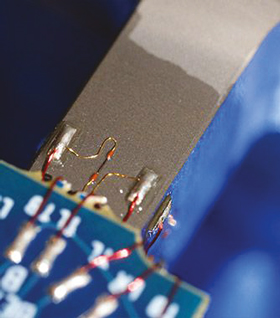 A force transducer manufacturer recently proved the point. Faced with the need for a sensing element ten times stiffer than before, their metal foil gauge no longer produced a usable signal. Instead of redesigning electronics to fight noise, they could adopt Piezo-Metrics’ semiconductor strain gage rosette to achieve the needed output without added installation complexity.
Piezo-Metrics also recognizes that the gage is only half the story. The other half is the person installing it.
The company has assembled one of the industry’s most experienced installation teams, with decades of expertise in placing gages on every imaginable surface and geometry. Through skill and practice, they have transformed what many engineers once considered “unreliable” into “reliable.”
Then there’s the ticking environmental bomb in every engineering application: temperature. Because semiconductor gages are thermally sensitive, they pick up temperature changes as readily as strain. Without proper compensation, readings drift, and confidence erodes. Piezo-Metrics addressed this problem with a proprietary compensation algorithm, which they are now offering freely as an online tool. The algorithm provides a linearized, temperature-compensated bridge output solution and removes one of the major barriers to semiconductor strain gage adoption.
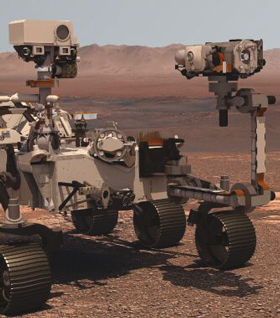 While aerospace, medical devices, and industrial automation remain core markets, the fastest growth is in sectors driven by miniaturization. IoT devices, advanced robotics, and automotive safety systems all demand compact, high-sensitivity gages. Yet these new applications expose a persistent knowledge gap.
“Most engineering programs still train exclusively on metal foil gauges, leaving many engineers unprepared to deal with the semiconductor strain gage’s unique characteristics, and its handling and calibration requirements,” says Dr. Franklin Wong, Principal Scientist.
To close that gap, Piezo-Metrics is launching an AI-enabled technical support agent. Hosted on its website, the interactive AI agent will answer engineering questions about semiconductor gages, provide design and installation guidance, and support temperature compensation and calibration efforts. Complex cases are escalated to human experts.
With smarter tools, expert support, and continuous improvements, Piezo-Metrics is building a future where engineers can unlock new levels of sensing and precision— and bring their ambitious designs to life.
Company
Piezo-Metrics
Management
Dr. Robert Mueller, Chairman and CEO
Dr. Franklin Wong, Principal Scientist
Description
A longtime leader in high-sensitivity sensing, Piezo-Metrics is transforming how engineers use semiconductor strain gages. With a new rosette that installs like a foil gauge, and an AI-powered support platform, the company removes complexity from precision measurement, making advanced performance accessible to more industries, applications, and engineers than ever before.

Manufacturing Technology Insights Weekly Brief
Be first to read the latest tech news, Industry Leader's Insights, and CIO interviews of medium and large enterprises exclusively from Manufacturing Technology Insights
