

THANK YOU FOR SUBSCRIBING
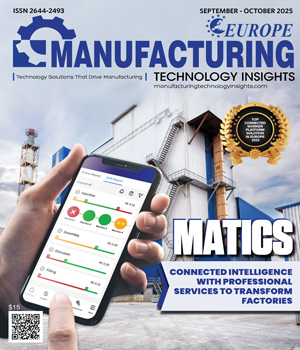
Connecting machines, systems, processes, and people with real-time actionable insights, underpinned with transformational coaching, converts manufacturing losses into business performance in days. For 25 years in 25 countries, MATICS has empowered manufacturers with advanced software and professional services to digitize operational excellence yielding a single version of manufacturing truth without disruptive capex or long change programs. MATICS’ unique features within valued use-cases measurably present great decision making and performance outcomes, while professional services change behaviour, accelerate adoption then sustains productivity, quality, and cost reductions across machines, lines, shifts, sites and groups. “In an era where factories are expected to deliver more with less, MATICS pairs real-time connected worker SaaS with professional coaching to convert hidden losses into measurable wins—fast,” says Leigh Tricklebank, VP of marketing and sales. By unifying machines, systems, processes, and people in one digital workflow, the platform replaces lagging reports with live guidance that tells teams exactly what to do next to protect throughput, quality, and margin, when to do it, and how to do it safely. The result is a practical path to double-digit productivity, lower cost-per-part, and predictable delivery—within the first 90 days. The transformation starts by making the shop floor intelligible in real time. Instead of spreadsheets and paper checks, operators see cycle stability, changeover readiness, and compliance tasks in one place, with prompts that prevent drift and escalate issues before they snowball into downtime. Supervisors run short-interval control using a single source of truth, while executives view site and group performance as it unfolds. MATICS’ coaching team accelerates adoption by building routines—tiered huddles, clear targets, and repeatable problem-solving—that lock in gains beyond the initial rollout.
Carlos Alves, Co-Founder and Administrator
Portugal is making strategic moves to become a key player in the semiconductor and microelectronics industry. The country aims to create a cluster environment that fosters chip design, silicon packaging and comprehensive microelectronics production. At the center of this initiative is the HFA Group, in Aveiro, a leading company in the electronics manufacturing industry operating with 29 years of experience. HFA Group operates on two main agendas—one focused on electronics and the other on building new vehicles, where it takes charge of the electronic components. It is always on the lookout to expand and innovate, as it prepares for advancements in photonics and next-generation networks. Comprising several companies with diverse focuses, HFA Group excels in electronics manufacturing services (EMS), photonics, optical fibers and the development of hardware and software for smart cities and energy solutions. A Telecommunications Institute and an electronic development center affiliated with Portugal’s largest telecommunications operator complete the group.


The world is in a constant quest for innovative solutions to combat rising carbon dioxide (CO₂) levels. Carbon capture technologies have gained immense traction in this regard, offering a viable route to significantly mitigate greenhouse gas emissions. novoMOF has emerged a leader in this field with its novel, solid sorbents—Metal-Organic Frameworks (MOFs)—for point-source carbon capture. The company’s journey started in 2017 as a spinoff from ETH Zurich and the Paul Scherrer Institute. Initially, novoMOF operated as a production company for a new generation of progressive materials for various market applications. However, the significant surge in demand for CO₂ capture drove it to this specific direction. Today, the company has become the perfect partner for businesses that want to decarbonize their operations, primarily driven by environmental concerns and economic considerations. From the selection and optimization of active MOF materials to its manufacturing and seamless integration into applications, novoMOF has the capability to help clients throughout the journey. The company acknowledges that the dominant method for point-source CO₂ capture is Amine Scrubbing, which comes with a price tag of $100 or more per ton of CO₂. However, many industries hesitate to adopt this method due to its high energy consumption, toxicity, and the complex infrastructure required. novoMOF's material technology not only matches this cost but also has the potential to undercut it, offering a more efficient and environmentally friendly solution for CO₂ capture. “Players across various industries approach us. They evaluated amine scrubbing and concluded it's not suitable for their needs. They turn to us in search of alternatives, recognizing MOFs as an emerging technology for carbon capture,” says Daniel Steitz, CEO and founder, novoMOF. novoMOF’s material requires minimal energy and operates within a simpler system architecture. In every capture cycle, they can capture 10 percent of their weight in CO₂. A fascinating aspect of these materials is their selectivity for CO₂ over water. They capture CO₂ even in the presence of water vapor, eliminating the need for pre-drying gas streams. The regeneration temperature is also incredibly low—below 100 degrees Celsius—which allows for efficient CO₂ release. Low-grade heat sources, such as waste heat from other on-site processes, can be utilized, potentially offsetting additional energy costs. In addition, the required regeneration energy is minimal compared to amine-based systems. This is possible due to the weak interactions between CO₂ and the MOF surface.
Connected Worker
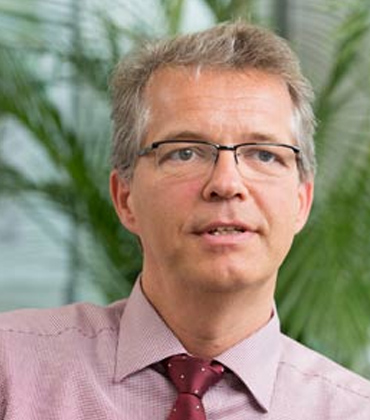
Dr. Udo Schneider, Senior Vice President Active Ingredient Manufacturing, Bayer Crop Science [ETR: BAYN]
Material Handing
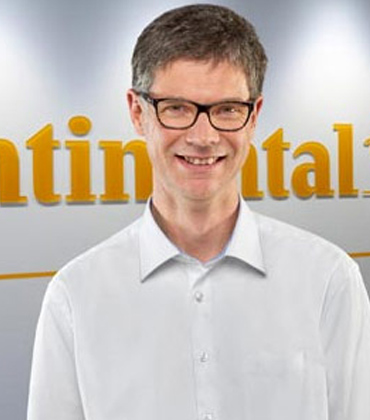
Thierry Wipff, Global Manufacturing Technology Engineering Tires, Continental Tires [FWB: CON]
Connected Worker
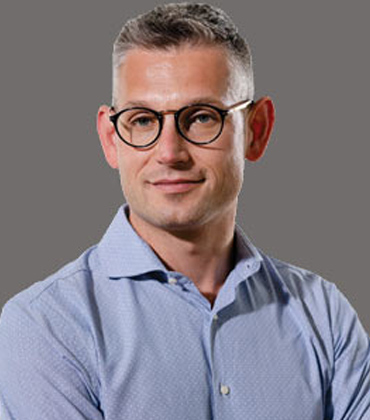
Alessio Preti, Director Industrial Strategy and Capex, Philip Morris International [NYSE: PM]
Smart Factory
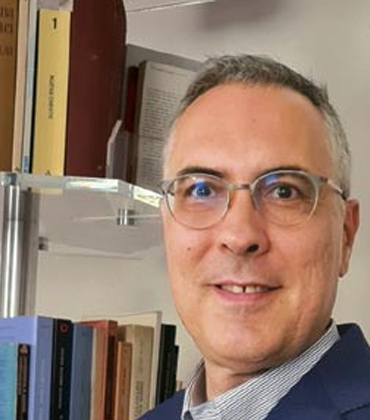
Andrea Rapetti, VP Smart Factory, Datwyler Group
Connected Worker

Maurizio Pietropaolo, Industrial Supply Chain IS Technician, Thales Alenia Space
Thermal Management
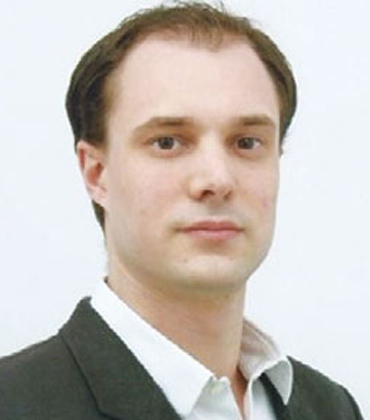
Laurent Huberty, Manufacturing Technology Team Manager, Husky Technologies
Connected Worker
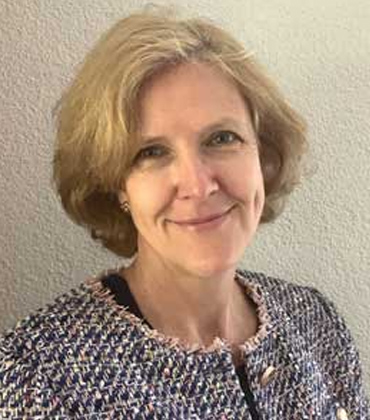
Christine Lodder, Senior Director Global Quality Assurance, Mérieux NutriSciences
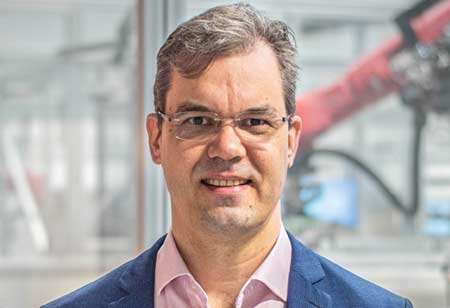
Material Handing
Janne Kuivalainen, CTO & Head of Technology, Danfoss Drives

Connected Worker
Kristof Beets, Vice President of Product Management, Imagination Technologies
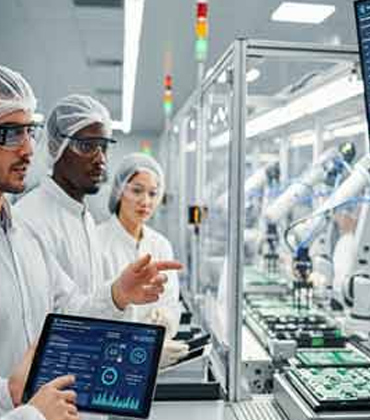
Connected Worker Platforms (CWPs) are transforming European electronics manufacturing by addressing skills gaps, improving operational efficiency, and ensuring workplace safety in a rapidly evolving industry.
The evolution of labour in Europe has transformed workers into digitally skilled professionals, integrating advanced technologies in manufacturing and fostering human-machine collaboration to enhance efficiency in Industry 4.0.
Driving Innovation Through Advanced Solutions
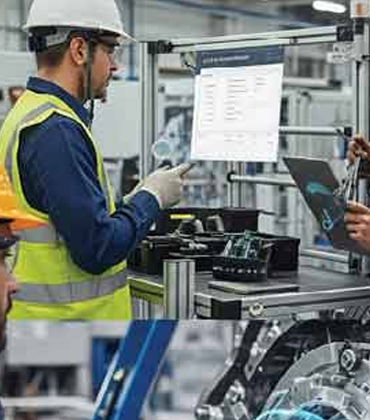
A Connected Worker Platform Solution is a game-changer for modern workforces. These platforms enable real-time collaboration, providing workers with tools that enhance safety, productivity, and performance on the job. By harnessing IoT devices, wearable technology, and AI-driven analytics, companies can ensure seamless communication, access to critical information, and efficient task management for employees, whether in manufacturing plants or remote locations. This not only improves operational efficiency but also minimizes risks and boosts employee engagement by fostering a smarter, more connected work environment.
On the materials front, Advanced Materials Solutions are the backbone of technological advancement in various sectors, including aerospace, automotive, and electronics. These solutions deliver high-performance materials engineered to withstand extreme conditions while maintaining their structural integrity. Whether it’s composites for lightweight, high-strength applications or advanced coatings to protect components from wear and corrosion, these materials play a pivotal role in improving the longevity, safety, and sustainability of products across industries.
Electronics Manufacturing Solutions, meanwhile, address the growing demand for high-quality, precise, and scalable manufacturing processes. With the advent of automation, AI, and 3D printing, the electronics manufacturing industry has embraced new methodologies to produce components faster and with fewer defects. These advancements have led to more efficient production lines, allowing for the mass production of complex components such as semiconductors, sensors, and circuit boards, while reducing waste and energy consumption.
Together, these three pillars—Connected Worker Platforms, Advanced Materials Solutions, and Electronics Manufacturing—are not only driving industry-specific advancements but also helping companies adapt to an increasingly digital and sustainable future. In this edition, we have contained insights form Thierry Wipff, Global Manufacturing Technology Engineering Tires, Continental Tires and Kristof Beets, Vice President of Product Management, Imagination Technologies. It also features MATICS who is a global leader in digital transformation, serving thousands of users in 25 countries for 25 years with a robust and secure operational excellence platform that is empowered with professional services.

Manufacturing Technology Insights Weekly Brief
Be first to read the latest tech news, Industry Leader's Insights, and CIO interviews of medium and large enterprises exclusively from Manufacturing Technology Insights
