

THANK YOU FOR SUBSCRIBING
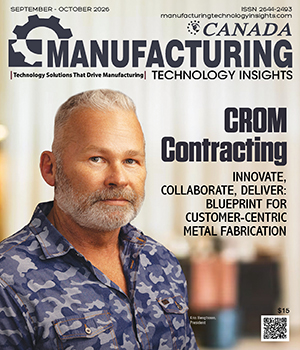
In the dynamic realm of metal fabrication, a symphony of processes, such as cutting, burning, welding, machining, and forming, orchestrates the creation of various products, ranging from essential hardware to intricate structural components. This sector stands as a linchpin in manufacturing, yielding an assortment of goods from basic tools to precise handrails. Its substantial contribution fuels an approximate annual growth of three percent, bolstering global industrial advancement. Yet, amid this continual expansion, the metal fabrication field has its share of challenges. Everything operates on demand and customers anticipate a streamlined experience even in an industrial setting. They want prompt product delivery, cost-effectiveness, and transparency in progress and expected delivery times. Achieving these expectations proves challenging due to the intricacies of the supply chain, fluctuating material costs, production delays stemming from equipment maintenance or breakdowns, and the complexities of coordinating various fabrication stages. This necessitates fabricators to adopt flexible processes that enable accurate cost estimates and empower them to efficiently handle intricate customer requests to stay ahead of the competition. “As a bespoke welding and fabrication company, our unwavering dedication lies in achieving complete customer satisfaction through a commitment to excellence. We pride ourselves on swiftly generating solutions and ideas for fabrication, ensuring the efficient and quality-driven delivery of products at affordable prices,” says Kris Bengtsson, president of CROM Contracting. The company provides comprehensive solutions, from simple repairs to intricate fabrications, covering both light and heavy construction to meet the diverse client requirements. CROM’s specialization encompasses various aspects of fabrication, inc
Fadi Emeid, Founder
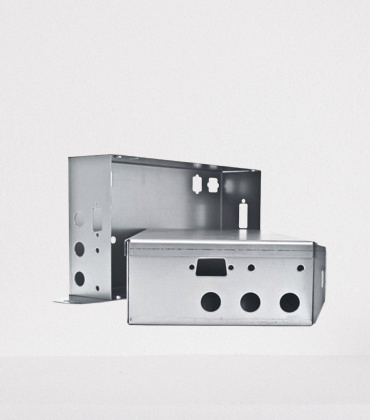
The ability to mold, adapt and evolve is what propels businesses to serve diverse industries with precision. Elias Custom Metal Fabrication Ltd. (ECM) has been following this principle for over three decades, giving them the expertise to work with a wide range of materials and cater to different industry verticals. Drawing on its decades of experience, ECM is well-positioned to tackle challenges that emerging companies haven’t even encountered yet. It essentially acts as a one-stop shop, tailoring solutions to the tee. Their expertise in engineering, production and logistics allows the company to offer end-to-end solutions—from design assistance and cost analysis to prototyping and full-scale production. “Our strength lies in versatility, driven by our expertise in utilizing diverse materials. This enables us to manufacture a wide range of products for multiple industries while meeting the specific demands of each sector,” says Fadi Emeid, founder. Team ECM is proficient in helping clients fine-tune their product designs for higher efficiency and cost savings. They work closely with the clients, guiding them from the initial concept development to production. The team carefully selects materials to meet project requirements, ensuring structural integrity at every turn. Once the designs are finalized, the company brings them to life with precise fabrication techniques. Precision is key, and with laser cutting and brake forming, it delivers metal components that fit clients’ specifications—ideal for architectural projects, commercial builds and custom retail fixtures. Its powder coating, polishing and other finishing offerings complement the fabrication process. This slew of services guarantees resistance from corrosion, minimal wear and tear, protection against environmental damage while also enhancing visual appeal. The result? Products that are ideal for high-end retail and architectural applications.
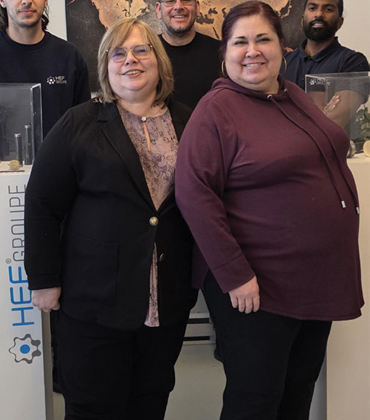
Daniel Varadaradjou, International Business Developer
Surface durability plays a crucial role in determining the longevity of metal components. When wear, friction and corrosion are addressed early in the parts manufacturing cycle, industries such as automotive, construction, defense and energy experience fewer disruptions with parts that last significantly longer. That’s where the surface engineering expertise of Techniques Surfaces Innovation (TSI) becomes a reliability lever. TSI helps manufacturers tackle these issues by engineering metal surfaces for stronger wear, lower friction and better corrosion protection, with processes designed to scale from trials to high-volume production. It is the Canadian subsidiary of HEF Group, a French surface engineering company founded in 1953. TSI’s competence spans tribology and photonics, and it also develops surface solutions for hydrogen applications such as electrolyzers and fuel cells. Its advanced capabilities include femtosecond laser processing, functionalized powders and engineered friction parts, composite self-lubricating bushings and nitrided pins, trusted by global giants like Caterpillar. “We handle everything in-house, from machines to consumables, ensuring consistent service quality across all regions we serve,” says Daniel Varadaradjou, international business developer. This approach is reinforced by TSI’s employee ownership structure, which enhances financial stability and enables quick investments in new capacity and customer-specific solutions. This supports both small-scale experimentation and high-volume production, reducing risk and ensuring flexibility in meeting market demands.
HVAC

Nam Do, Vice President Operations, Layfield Flexible Films
Corrosion

Hao Dinh, VP Technology, Enpro Inc
Advanced Materials

Jason DeHaan, Chief Information Officer, Gildan (NYSE: GIL)
Industrial Filtration

Wayne Borrowman, Director, Research and Development, CIMCO Refrigeration Inc
Industrial Product and Safety

Scott Dumville, P.Eng, Engineering Manager, The JNE Group of Companies
Advanced Materials

Paul Craig, Senior Director of Technology Strategy, Ledcor
Power Electronics

Greg Sharma, Director – IT Infrastructure, Maple Lodge Farms

Industrial Automation
Mariana Filipic, Senior Director of Global Quality, Mold-Masters [NYSE: HI]

Industrial Automation
Julie Ellsworth-Enman, Director of Finance, Sofina Foods
The Canadian manufacturing sector is undergoing a significant transformation, driven by technological advancements, a growing focus on sustainability, and increasing awareness of the importance of indoor air quality (IAQ).
Canadian companies constantly seek strategies to enhance efficiency, innovation, and profitability in today's demanding manufacturing landscape.
Modernizing Metal Fabrication and Welding through Digital Transformation
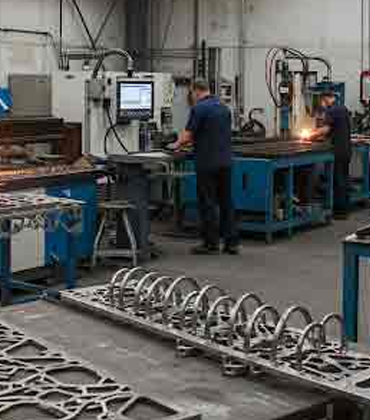
The adoption of Industry 4.0 technologies—such as artificial intelligence (AI), machine learning, and the Industrial Internet of Things (IIoT)—is transforming operations across welding and fabrication facilities. Companies are increasingly incorporating smart tools into their workflows, enhancing productivity and quality through predictive maintenance, real-time monitoring, and advanced data analytics. By embedding sensors into fabrication lines and welding equipment, facilities can anticipate maintenance needs, reduce downtime, and ensure consistent output quality.
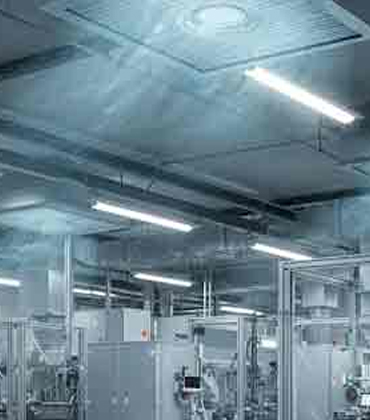
AI-powered platforms are also supporting stronger quality control. These tools can analyze production data to identify deviations early, enabling corrective measures before costly errors occur. This results in both higher product accuracy and lower operational costs. In air diffuser manufacturing, simulation-driven design and smart integration are optimizing airflow efficiency and energy use, especially in commercial and industrial HVAC systems.
The Canadian government and industry bodies continue to play a vital role by funding training initiatives, offering innovation grants, and encouraging public-private partnerships. Ongoing investment in technology, sustainability, and talent development ensures the sector can meet domestic demands and strengthen its global competitiveness.
As fabrication technologies evolve, the challenge lies in balancing digital innovation with cost-efficiency—while meeting both the technical and environmental expectations of modern manufacturing. By embracing this transformation, Canada’s metal fabrication and welding sector is well-positioned to lead in a globally competitive market—delivering smarter, more sustainable solutions that define the future of advanced manufacturing.

Manufacturing Technology Insights Weekly Brief
Be first to read the latest tech news, Industry Leader's Insights, and CIO interviews of medium and large enterprises exclusively from Manufacturing Technology Insights
