


THANK YOU FOR SUBSCRIBING


 Dr. Leong-Chew Lim, CEO
In the late 1950s, Russian scientists I.E. Myl’nokova and V.A. Bokov laid the groundwork for this revolution. Using PbO flux in high-temperature solutions, they synthesized ferroelectric single crystals, including lead zinc niobate (PZN).
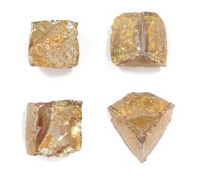
In the late 1960s, Professor S. Nomura’s team in Japan used flux growth techniques to produce binary lead zinc niobate-lead titanate (PZN-PT) single crystals across the full composition range. Initially limited to mere millimeters in size, by the early 1980s, they had produced sizable crystals exhibiting exceptional piezoelectric properties—achieving, for the first time, extra-ordinally high piezoelectric coefficients of around 1,500 pC/N for PZN-PT single crystal of near the morphotropic phase boundary (MPB) composition. Their pioneering efforts opened doors to potential high-end applications in medical imaging and underwater exploration. Yet, the challenge of growing large, high-quality crystals remained.
The quest to grow large-size, high-quality PZN-PT single crystals for commercial exploitation intensified in the 1990s. As the new millennium approached, MMT, under the visionary leadership of Dr. Leong-Chew Lim, seized the moment to perfect these remarkable crystals. Recognizing the untapped potential, Dr. Lim’s team refined the complex process of high-temperature flux growth. They developed a unique setup and crystal growth program enabling controlled point nucleation, effective crystal selection, and subsequent equilibrium growth of PZN-PT single crystals.
“We saw an opportunity where others had struggled,” Dr. Lim, CEO of MMT, recalls. “The properties of these crystals were simply too powerful to ignore, and we knew that if we could solve the growth issues, we could open up a world of possibilities.”
Today, MMT is a leader in piezoelectric technology, supplying industries with cutting-edge sensors, transducers and actuators that leverage the properties of PZN-PT single crystals. Their success underscores the importance of perseverance in scientific innovation and heralds a new era in advanced material applications.
The Crystal Advantage
Over the years, MMT’s PZN-PT crystals have become a game-changer for underwater imaging technology. PZN-PT single crystals exhibit unique piezoelectric properties, boasting piezoelectric coefficients five times greater than traditional ceramics and electromechanical coupling factors of >0.9. The former parameter translates to high voltage response/sensitivity, and the latter to a broad band width of devices made from them. PZN-PT single crystals have enabled groundbreaking innovations in piezoelectric devices, notably in underwater and medical imaging.
“In underwater and medical ultrasound imaging, precision and resolution are everything,” notes Dr. Lim. “Our crystals make it possible to image and detect targets and/or abnormalities more accurately, which can significantly improve image quality and outcomes.”
PZN-PT single crystals are highly suited for fabricating compact broadband underwater transducers of low-to-mid operating frequency (10 to 50 kHz). These transducers have a much improved detection range, making large-area, high-efficiency sea-floor mapping possible using unmanned autonomous underwater platforms. Their broadband signals, which produce more information for image construction, augment this. They also enable the imaging of buried objects up to a few meters deep.
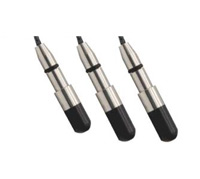
In addition to underwater sound transmission, compact hydrophones made of PZN-PT single crystals display extra-ordinally high receiving sensitivity (of -194 dB to -182 dB typically). They are 4x to 8x higher in sensitivity than their piezoceramic counterparts, size for size. This enables the development of high-performance, cost-effective receiving arrays that are not possible with state-of-the-art piezoceramics. High-sensitivity miniature hydrophones and acoustic vector sensors have also been successfully developed, thanks again to the excellent properties of PZN-PT single crystals. These sensors are ideal for line arrays for underwater target detection and tracking, allowing for detecting even the faintest signals in the ocean’s depths. These miniaturized line arrays can be readily deployed and retracted on the seabed and/or via an autonomous underwater carrier where applicable. They are highly versatile tools for underwater threat detection and for harbor security purposes.

We saw an opportunity where others had struggled. The properties of these crystals were simply too powerful to ignore, and we knew that if we could solve the growth issues, we could open up a world of possibilities
The above-said compact acoustically matched PZN-PT underwater transducers also make the development of compact low-frequency parametric arrays of low drop-down ratio possible, another breakthrough in sonar technology. These new low-frequency parametric arrays exhibit much higher power efficiency than current arrays from high-frequency primary sources. Despite their compactness, they display unmatched detection ranges compared to state-of-the-art huge bow arrays of a few to high meters in size. The above-said miniaturized low-frequency parametric arrays are highly suited for unmanned underwater and aerial platforms.
Contemporary scientists and researchers have also used PZN-PT single crystals to make medical imaging transducers, typically in the MHz frequency range. As reported, PZN-PT medical probes and phase arrays exhibit much improved bandwidth, high resolution in image quality and analysis outcomes than state-of-the-art piezoceramic probes.
In addition to PZN-PT single crystal, MMT also fabricates a range of low-noise mid-to-high-frequency transducers powered by piezo composites suitable for down-hole environments in the oil and gas industries. The client ships these transducers to users worldwide, and they play an essential role in ensuring good structural stability and safety, reducing operational costs and minimizing the environmental impact of resource extraction.
Optimally poled and processed PZN-PT single crystals typically exhibit a low dielectric loss of <0.2%. They are ideal materials for developing high-linearity, low-hysteresis actuators for a range of precision motion and control platforms. These MMT’s “Hi-Fi multi-stake single crystal actuators” find unique applications in laser / optic devices for which low-to-medium blocking forces suffice.
Recognizing that the future of piezoelectric materials would require more than just advancements in crystal growth, MMT heavily invested in R&D to optimize the entire crystal growth process—from nucleation to crystal selection. This dramatically improves the quality and yield of usable crystals. At present, we are working on the growth of large PZN-PT single crystals of about twice the volume and, hence, the weight of currently produced crystals.
“It’s not just about growing the crystals; it’s about maximizing their performance while minimizing waste. Our technological innovations have allowed us to meet the growing demand for these materials without compromising quality,” elaborates Dr. Lim. The firm’s plan is to migrate to large-size PZN-PT single crystal production in early 2025 to reduce crystal cost and make PZN-PT single crystals accessible to various users.
Also under development is the growth of PZN-PT-based single crystals of modified compositions and performance characteristics. Our focus in this area includes the growth of high-power density crystals, crystals of extremely low dielectric loss and/or crystals of high use temperature.
Collaboration has also been a key component of MMT’s success. The company has built partnerships with some of the world’s top-tier research institutions and universities, enabling it to stay ahead of emerging trends in piezoelectric research and explore new applications for its crystals.
A Future Powered by Piezoelectric Innovation
Although MMT’s piezoelectric technology, including PZN-PT crystals and devices, has significantly impacted industries such as healthcare, energy and defense, it is actively pursuing new frontiers where its crystals can drive further innovation and create transformative solutions.
An exciting possibility is the aerospace industry, where lightweight, high-performance materials are in constant demand. PZN-PT crystals, with their exceptional strength and piezoelectric properties, are being tested for use in sensors and actuators in aircraft and spacecraft. These applications could lead to more efficient flight systems and fuel efficiency, making aerospace travel safer and more sustainable.
Similarly, the need for highly responsive sensors and precision actuators has grown as robots become more advanced and capable of performing intricate tasks. MMT’s PZN-PT crystals, with their unparalleled sensitivity and precision, are ideally suited to meet these demands.
Dr. Lim explains, “The future of robotics will rely heavily on materials that can respond quickly and accurately to changes in their environment. Our crystals are perfectly positioned to enable the next generation of robotic technologies.”
Despite all these advances, MMT remains committed to delivering high-performance piezoelectric materials and devices to industries that need them most. The company’s ability to innovate, adapt and continuously improve its processes has been key to its success.
A Legacy of Excellence in Materials Science and Technology
MMT’s pioneering efforts have not gone unnoticed. Over the years, the company has earned prestigious accolades for its technological advancements. It is known to be the only commercial supplier of PZN-PT single crystals and a technology leader in piezo single crystal device ODM and OEM. In 2015, MMT received the National Defence Technology Award for successfully developing the first of its kind Single Crystal Dual-Frequency Synthetic Aperture Array with the DSO National Laboratories of Singapore. Since his years with the National University of Singapore, Dr. Lim has constantly published his research results in renowned technical journals and presented his R&D findings at international conferences, notably on new single crystal devices and system development.
For MMT, the journey of PZN-PT single crystals is far from over. The potential applications for these crystals are vast. As the firm continues refining its technology and exploring new uses, the impact on industries worldwide will likely grow.
“We’re only scratching the surface of what’s possible. The applications for PZN-PT are limitless, and we’re excited to drive this revolution forward,” concludes Dr. Lim.
With that bold vision, MMT is not just a company that solves complex material science problems; it is a force defining the next generation of technological innovation.

Company
Microfine Materials Technologies
Management
Dr. Leong-Chew Lim, CEO
Description
Microfine Materials Technologies (MMT) is a global leader in advanced piezoelectric technology, specializing in high-quality PZN-PT single crystals. Its innovations power cutting-edge applications across industries, from medical imaging to sonar systems, with award-winning expertise in crystal growth and material science breakthroughs.

Manufacturing Technology Insights Weekly Brief
Be first to read the latest tech news, Industry Leader's Insights, and CIO interviews of medium and large enterprises exclusively from Manufacturing Technology Insights
