

THANK YOU FOR SUBSCRIBING

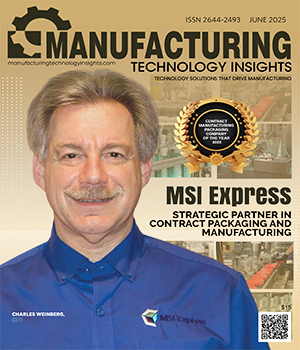
In today’s fast-moving world of consumer packaged goods (CPG), companies are under constant pressure to optimize production, reduce costs, and accelerate their time to market. Whether launching a new snack line, beverage, pet food, or health and wellness product, brands need more than just a manufacturer that can churn out products—they need a strategic partner that provides operational efficiency, flexibility, and industry expertise. That’s exactly what MSI Express brings to the table. Led by CEO Charles Weinberg, MSI Express is more than just another contract manufacturer. The company has positioned itself as a leader in the space by focusing on engineering-driven solutions, intelligent supply chain management, and a deep commitment to helping brands scale efficiently. “Instead of operating as a transactional vendor, we take a holistic approach to manufacturing, ensuring that clients not only receive high-quality products but also benefit from cost optimization, streamlined logistics, and reduced lead times,” says Weinberg. Many brands enter partnerships with manufacturers expecting a simple exchange: specifications are provided, production begins, and products roll off the assembly line. But MSI Express challenges this conventional model by asking deeper, more strategic questions: 1. Can the product be manufactured closer to its final distribution points? 2. Are there ways to adjust the formulation or packaging to save costs without compromising quality? 3. Could automation be leveraged to improve efficiency without requiring a massive upfront investment? These considerations set MSI Express apart, making it a true extension of the brands it partners with rather than just another supplier.
Haydee Dibble, Vice President
The advanced materials industry plays a critical role in the evolution of modern technology. Engineers today face the dual challenge of ensuring electromagnetic compatibility while managing heat dissipation in increasingly compact and high-performance devices. From 5G infrastructure to medical equipment, aerospace applications, and electric vehicles (EVs), the demand for reliable EMI shielding and thermal management solutions continues to grow. Electromagnetic interference (EMI) can disrupt device functionality, degrade performance, and cause regulatory compliance issues. At the same time, the thermal load in electronic systems has escalated, requiring innovative solutions to prevent overheating and maintain long-term reliability. Engineers must strike a delicate balance between shielding effectiveness, material flexibility, and environmental durability—all while meeting stringent industry regulations such as RoHS, REACH, and UL compliance. Integrating Shielding and Thermal Management Into the Design Process One of the biggest challenges in electronic design is ensuring that EMI shielding and thermal management solutions are not afterthoughts but integral to the development process. A reactive approach to these issues can lead to costly redesigns, manufacturing delays, or compromised performance. Schlegel Electronic Materials (SEM) works closely with design engineers to integrate shielding and thermal solutions early in the design cycle. Engineers don’t have to modify their designs to accommodate standard materials, SEM specializes in developing tailored solutions that fit seamlessly within existing constraints. This collaborative approach enables companies to accelerate product development while maintaining performance, reliability, and compliance. Material Science Innovations for EMI and Thermal Solutions SEM’s portfolio of advanced materials includes fabric-over-foam gaskets, conductive elastomers, and wire-oriented silicone (WOS) gaskets, each designed to meet the evolving demands of modern electronics. • Conductive Elastomers: Incorporating materials like silver-plated aluminum or nickel-coated graphite into a silicone base, these solutions offer both EMI shielding and environmental sealing, ensuring protection against moisture, dust, and vibration. • Wire-Oriented Silicone Gaskets (WOS): These materials integrate metal wires into elastomeric matrices, providing superior EMI and radio-frequency interference (RFI) suppression while maintaining mechanical resilience. • Custom Die-Cut Components: For applications requiring precise geometries and low compression force materials, SEM delivers solutions tailored to specific engineering challenges, reducing design constraints and optimizing performance. • Thermal Management Solutions: As heat dissipation becomes a critical factor in high-power electronics, SEM offers phase-change materials, thermally conductive gaskets, and other solutions to enhance thermal efficiency and system reliability.

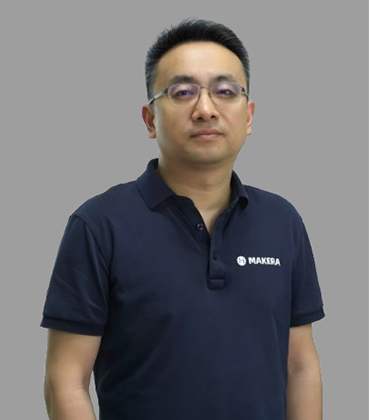
Makera is reimagining CNC machining for a new generation of creators. Born from the belief that these powerful manufacturing tools should be as accessible as 3D printers, Makera delivers industrial-grade precision in a compact, desktop format, putting advanced capabilities into the hands of every maker. The idea took root nearly a decade ago when the founders were immersed in the world of drones, robotics and electronics. They were makers themselves, constantly experimenting with their ideas. But again and again, they hit the same wall. They needed precise, custom parts, and the available tools didn’t cut it. Industrial CNC machines were too expensive and overkill for small-scale projects. While affordable, desktop alternatives were slow, cumbersome, and limited in capability. “We wanted a machine that’s fast, precise and easy to use,” says Josh Zhang, CEO and co-founder. “We couldn’t find one, so we built one.” What was conceptualized as a tool quickly evolved into a full-blown vision; to remove the barriers around CNC technology and give more people the power to make high-quality products. They set out to combine the accessibility and size of desktop machines with the power and reliability of industrial systems, eliminating clunky software, manual tool changes, and steep learning curves. Precision Machining Without the Complexity That vision took shape in 2021 with the launch of the Carvera, a fully automated, next-gen CNC machine designed to remove the complexity and cost barriers to precision manufacturing. The Carvera features automatic tool-changing, enabling seamless transitions between tasks for faster production and a true autonomous experience. It also includes wireless auto-probing and auto-leveling, features rarely seen in desktop CNCs. While most machines are limited to conductive materials, the Carvera’s system works reliably across a range of surfaces, including PCBs, plastics, woods, and soft metals. The probe maps the surface and adjusts toolpaths in real-time, ensuring consistent cut depths and clean finishes, even on uneven or warped stock. This level of precision and automation further reduces manual intervention, making the Carvera a powerful tool for rapid prototyping and complex hobbyist projects. Combined with self-developed CAM software, the Carvera eliminates the need for expensive and complex industrial programs, making professional-grade machining accessible to makers of all levels. In its debut year, the Carvera raised $1.7 million on Kickstarter and sold 500 units, a clear sign that Makera’s approach resonated with engineers, product designers and educators. The response was overwhelming, proving there was a massive demand for a powerful, intuitive and user-friendly CNC solution.
Industrial Automation

Greg Thompson, Sr. Director of Operations - CNC, Protolabs [NYSE:PRLB]
Contract Packaging
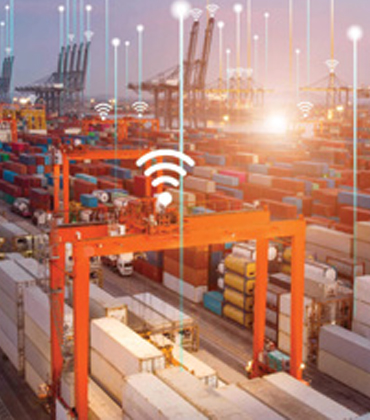
Bridget Grewal, Director of Packaging Continuous Improvement, Magna International
CNC Machining

Rick Kazmierzak, Sr. Corp Manufacturing Engineer, Accuride
Contract Packaging

Satya Mishra, Director of Products and Technology, Amazon Business
Manufacturing IT

Jake Elson, VP, Chief Information Officer, Interface

Contract Packaging
Laurent Tarnaud, Director Of Manufacturing - Lithium, Trojan Batteries

Contract Packaging
Thales Souto, Manufacturing Engineering Manager, TE Connectivity
The landscape of manufacturing technology is undergoing a significant transformation, and within this evolution,
The Rise of Agile, Intelligent Manufacturing Ecosystems
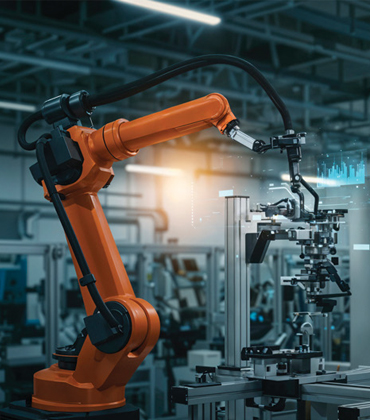
This shift is evident in fast-paced sectors like electronics and consumer goods, where the demand for speed, customization and quality continues to grow. Manufacturers now rely on contract manufacturing, advanced materials and desktop CNC technologies. While each solution evolves independently, the combined impact creates an ecosystem built for flexibility, high performance and scalable production.
Contract manufacturing and packaging services are essential enablers of modern production. Through specialized facilities, QA systems and streamlined logistics, these service providers allow companies to reduce lead times and accelerate product launches. In fast-moving markets, this flexibility translates to a powerful competitive advantage.
At the core of this transformation lie advanced materials, marked by the shift from traditional, centralized manufacturing to a more flexible, technology-driven model. The solutions, ranging from engineered polymers to sustainable composites, are elevating product functionality and durability. They are customized for industry-specific needs, whether thermal resistance in electronics or biocompatibility in medical devices.
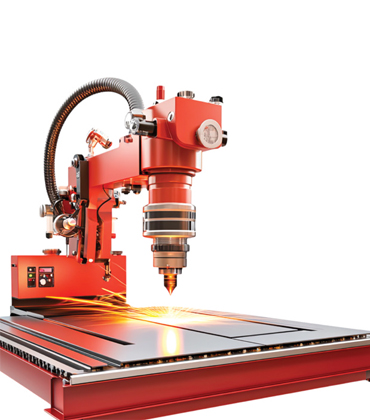
True innovation happens when advanced materials are paired with technologies that bring ideas to life. Desktop CNC brings precision and speed to the development process. By enabling rapid prototyping and in-house production, they complement contract services and material innovations, creating an integrated environment for responsive manufacturing.
In this edition of Manufacturing Technology Insights, we spotlight MSI Express for its turnkey solutions in food and beverage contract manufacturing and packaging. Also featured is the top desktop CNC machining company and high-performance materials solution provider, each driving agility, precision and innovation in specialized manufacturing sectors.
Further enriching this edition, senior leaders offer impactful perspectives on manufacturing innovation. Thales Souto, Manufacturing Engineering Manager at TE Connectivity, emphasizes leadership and technical fluency in advancing smart factory initiatives. Adding another valuable dimension, Bridget Grewal, Director of Packaging Continuous Improvement at Magna International, highlights sensor-driven strategies for smarter, more efficient container and supply chain management.
We hope this edition explores how material innovation, precision technologies and agile partnerships are transforming manufacturing ecosystems for speed and scale. Let us know your thoughts!

Manufacturing Technology Insights Weekly Brief
Be first to read the latest tech news, Industry Leader's Insights, and CIO interviews of medium and large enterprises exclusively from Manufacturing Technology Insights
