


THANK YOU FOR SUBSCRIBING


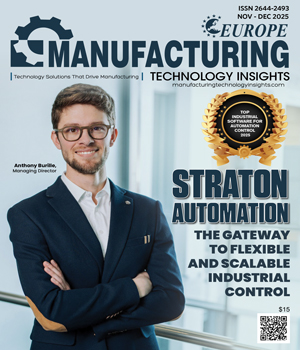
 Anthony Burille, Managing Director
Across the automation stack, fragmentation remains endemic. Substation and grid systems use IEC 61850 and DNP3, process industries rely on Modbus or Profinet, transportation uses CAN J1939, and IoT favors MQTT and OPC UA, among others. Each protocol is context-specific, creating incompatible data models and timing behaviors. Integrating them requires converters or middleware, which adds latency, reduces determinism, and increases complexity.
At the software layer, many industrial control platforms are monolithic and hardware-coupled, with runtimes compiled for specific chipsets or operating systems. Scaling from a bare-metal controller to a multi-core Linux gateway requires re-architecting code, revalidating timing, and rebuilding communication stacks. This tight software and hardware coupling slows innovation and drives up costs when flexibility is most valuable.
What is needed is a universal runtime: modular, hardware-agnostic, able to run bare-metal or scale under Linux and Windows, and capable of integrating with existing protocols.
C-based architectures excel in this area. They are efficient enough for real-time control yet portable across any hardware or operating system. A runtime built in C moves seamlessly between platforms without performance loss or the need to rewrite code.
We make it a priority to listen to our customers because they’re on the frontlines every day. By incorporating their feedback, we co-create solutions that truly address their challenges and align with the market.
This is the foundation of STRATON AUTOMATION.
Delivered as portable C code, its flagship software platform, straton®, can be embedded directly into a microcontroller or deployed on a server cluster, executing the same logic without modification. Its independence from any operating system or hardware abstraction layer eliminates the legacy friction that defines most industrial runtimes.
“We have developed our product to support the world’s most critical standards. Our software seamlessly integrates both within specific sectors and across multiple sectors, enabling intelligent automation of data”, says Anthony Burille, Managing Director.
The All-in-One Suite for Modern Automation
The straton® software, fully compliant with the IEC 61131-3 standard, is a comprehensive suite that includes an IEC 61131-3 editor, a runtime environment for application execution, and development kits for seamless integration with any electronic board.
 The IEC 61131-3 editor provides an intuitive yet powerful development environment, enabling engineers to design applications with maximum efficiency. It supports all IEC 61131-3 programming languages (ST, FBD, SFC, LD, IL) and offers advanced tools for fieldbus configuration, automated setup, and real-time project diagnostics.
The runtime environment ensures reliable execution of applications created with the editor. Designed to be hardware- and operating-system-independent, it can be integrated into any software platform and supports a broad range of drivers and communication protocols. This flexibility allows manufacturers to offer users greater freedom in programming equipment such as PLCs, HMIs and axis controllers, RTUs for energy and utilities, embedded systems, and production machinery.
Furthermore, the seamless integration of straton® with COPA-DATA’s zenon software platform enables effortless scalability, extending projects from field-level control to SCADA-level management as operational needs evolve.
Customer-Centered Co-Creation
STRATON AUTOMATION begins every strategic decision by listening to its customers. The team monitors technology trends such as the rise of MQTT, the evolution of the IEC61850 standard to Edition 2.1, and the growing importance of J1939 to anticipate market shifts. These insights are complemented by an annual survey that captures client priorities and challenges to ensure that product development aligns directly with customer needs.
The emphasis on active listening forms the basis of what Mr Burille describes as co-creation. “We make it a priority to listen to our customers because they’re on the front lines every day. By incorporating their feedback, we co-create solutions that truly address their challenges and align with the market.”
Together, flexibility in programming, responsiveness to customer needs, and robust technical portability enable straton® users to design products that are powerful, reliable, and tailored to their markets. The software is built not just to meet current demands but to evolve alongside the ambitions of its customers.
Streamlining Processes Across Industries with Intelligence
With tools developed specifically for the embedded, automation, and energy markets, the company enables manufacturers to strengthen their leadership with advanced and disruptive technologies.
In the embedded sector, for example, straton® is used to monitor and manage small pumps in buildings. By providing real-time data such as pressure, flow rate, and operating status, it allows operators to transmit critical information to higher-level systems with ease, ensuring reliable performance and simplified maintenance.
 This flexibility extends to the transportation industry, where the platform supports buses and trucks by centralizing information such as stop requests, door controls, and passenger comfort management (lighting, air conditioning…). Companies like Actia Mobility rely on the platform to consolidate data in base controllers and automate essential functions with precision, improving both safety and efficiency.
In the energy and utilities market, straton® further distinguishes itself by incorporating all the essential features required for both primary and secondary equipment. This makes the platform a robust and versatile solution across industries, trusted by manufacturers seeking smarter automation and reliable system integration.
Demonstrating Success Through Practical Solutions
The real-world impact of straton®’s capabilities is evident in how quickly and efficiently it can be deployed. In one recent project, a customer needed a specialized automation algorithm implemented on their device with a specific communication protocol, and the timeline was tight. Thanks to the platform’s flexibility, the team had straton® fully operational on the customer’s hardware in just 48 hours, enabling rapid product delivery.
Experiences like this highlight the speed and efficiency of the solution and also inform ongoing product development. For instance, while IEC 61131-3 has long been the standard for PLC programming, feedback from customers and new engineers indicated that it was becoming outdated. They emphasized the growing importance of modern programming languages such as Python in contemporary automation projects. Responding to this, STRATON AUTOMATION integrated Python in a way that is as intuitive and accessible as traditional programming languages, allowing users to seamlessly program within the straton® editor. This improvement expands the platform’s capabilities, enhances its openness, and enables a wider range of engineers to develop automation applications efficiently.
From Proven Today to Essential Tomorrow
The company’s technology reflects more than 20 years of focused development, resulting in a mature, reliable, and feature-rich platform. Continuous improvements have expanded its capabilities and reinforced its reputation as a trusted solution across industries.
The future presents compelling opportunities, particularly as renewable energy systems become more standardized. Renewable power plants are required to integrate with substations, creating demand for virtual PLC solutions. By enabling specialized communication protocols and offering greater flexibility in grid management, this technology is well positioned to play a central role in the transition to cleaner energy systems.
At the same time, STRATON AUTOMATION is evolving into a broader software platform. Its high degree of customization allows it to adapt to diverse applications, whether deployed on virtual machines, in the cloud, or on containerized distributed platforms. This openness enhances scalability and ensures relevance in a rapidly changing technological landscape.
The trajectory is clear: straton® is not only a proven solution today but also a forward-looking platform that will continue to shape how industries manage complexity, connectivity, and innovation in the years ahead.
Company
STRATON AUTOMATION
Management
Anthony Burille, Managing Director
Description
STRATON AUTOMATION is an industrial automation software company that develops modular software solutions for controlling and monitoring machinery and processes, primarily for OEMs and industrial applications. Its flagship software platform, straton®, is fully hardware independent and provides a way for OEMs to integrate automation and communication capabilities directly into their products.

Manufacturing Technology Insights Weekly Brief
Be first to read the latest tech news, Industry Leader's Insights, and CIO interviews of medium and large enterprises exclusively from Manufacturing Technology Insights
