


THANK YOU FOR SUBSCRIBING


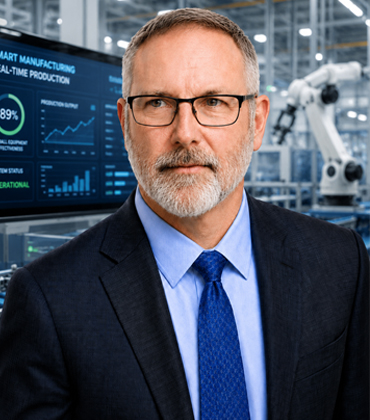 Edward Dickson, President
Here, Ujigami positions itself not as another analytics platform, but as a fundamental shift in how factories think, decide, and operate. The company has built its identity around a simple but transformative premise: intelligence must exist where production happens, not merely where it is reported.
For years, manufacturers have relied on Business Intelligence systems to interpret operations after the fact. Dashboards, reports, and data lakes have provided visibility, but they have remained inherently passive, requiring human action. Ujigami challenges this paradigm by embedding intelligence directly into the manufacturing process itself. Rather than asking operators or managers to interpret data and respond, the system assumes responsibility for monitoring, managing, and controlling production processes in real time.
As Edward Dickson, President, explains, “Manufacturing intelligence is the active control of manufacturing processes through direct real-time communication, automated decision making, and adjustments.”
This distinction is not semantic; it is architectural. Traditional systems aggregate and display information. Ujigami intervenes. It connects directly to operators, machines, sensors, and equipment across the plant floor, continuously assessing performance against defined specifications. When deviations emerge, the system does not wait for human interpretation. It adjusts parameters automatically, ensuring that production remains within optimal bounds. This shift from observation to action defines the company’s approach and sets it apart from conventional AI solutions.
Unifying Fragmented Data Environments
At the core of this capability is Ujigami’s ability to unify fragmented data environments. Manufacturing facilities often operate with a mix of legacy systems and modern equipment, each generating data in different formats and through different protocols. Integrating these systems has traditionally required significant programming effort and specialized expertise. Ujigami removes this barrier through a no-code environment that abstracts complexity from the user. Operators and engineers identify the equipment, and the platform handles communication, translation, and integration.
 The system relies on standard Ethernet connectivity, allowing it to interface with virtually any device on the plant floor. Once connected, Ujigami monitors raw signals and transforms them into structured input signals. Each data point is contextualized, tagged, and stored in a way that makes it immediately usable for both internal operational control and higher-level analysis. In this sense, Ujigami functions as both a real-time intelligence engine and a foundational data layer for broader enterprise systems.
However, the company’s differentiation lies not only in its ability to collect and organize data, but also in how it interprets and acts upon it. Ujigami all active variables simultaneously, considering factors such as temperature, power, current, humidity, production rates and other process variables. Instead of optimizing a single parameter in isolation, it assesses the interplay between variables to maintain overall system performance. This multidimensional approach enables the platform to optimize output while preventing secondary issues such as overheating or equipment strain.
Minimizing the Risk of Defects
Ujigami’s concept of product-directed manufacturing further illustrates this philosophy. In traditional production environments, processes dictate the movement and treatment of parts. Ujigami reverses this relationship. The system determines each part’s sequence of operations, the specifications for each step, and the criteria for acceptable outcomes. Each part carries a digital identity that Ujigami uses to identify it through the manufacturing process. As a result, with the oversight and control of Ujigami, the product itself effectively directs its path through the factory.
Dickson draws an analogy to modern navigation systems to explain this capability. “Like a vehicle navigation system, Ujigami calculates the best manufacturing path based on the current process performance and then controls each part through the process, making adjustments in real time,” he notes. This dynamic routing ensures that production continuously adapts to changing conditions, whether they involve equipment availability, process variability, or external constraints.
Manufacturing intelligence is the active monitoring, management, and control of the manufacturing process as it is being run.
The implications of this approach extend beyond efficiency. By maintaining tight control over each step of production, Ujigami reduces variability and minimizes the risk of defects. The system performs pre-production checks, performs and verifies equipment setup to ensure that all parameters are correctly configured before processing begins. During production, it continuously monitors performance, making incremental adjustments to ensure every parts meets its specification limits. This proactive intervention prevents the gradual drift that often leads to quality issues.
Equally important is the system’s ability to manage anomalies. When irregularities occur, Ujigami identifies them early and determines the appropriate response. In some cases, it compensates for the anomaly in subsequent processes. In others, it diverts the affected part to rework or containment, preventing defects from propagating downstream. This containment strategy reflects a broader principle within the platform: each stage of production is treated as a customer of the previous stage, and no defect is allowed to pass unchecked.
The business impact of this approach is measurable. Reduced defect rates lead to increased productivity, lower warranty claims, improved customer satisfaction, and an enhanced brand reputation. By eliminating human error in setup and decision-making, the system also reduces variability and ensures consistent performance across shifts and operators.
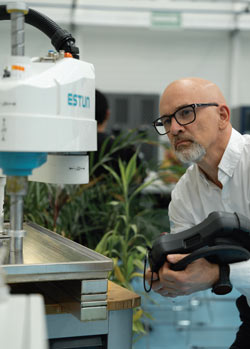 A practical example illustrates these benefits. Ujigami worked with a tier-one automotive supplier operating an injection molding and assembly process that was largely manual. Setup required operators to select materials, configure machines, and validate output through individual part review. Each step introduced opportunities for error, from incorrect material selection to improper parameter settings. Quality checks relied heavily on human inspection, further increasing the risk of inconsistency.
With Ujigami, the process was transformed into a fully automated operation. Ujigami schedules production, instructs operators on tool changes, and configures machine parameters automatically. It interfaces with material handling systems to ensure that the correct materials and colorants are delivered to each machine. Vision and sensors embedded in the process validated output quality in real time, eliminating the need for manual inspection at critical stages. Downstream operations, including assembly and packaging, were similarly automated and coordinated.
The result is a lights-out manufacturing environment in which human intervention is limited to essential physical tasks. Errors associated with manual setup were eliminated, process consistency improved, and overall efficiency increased. This transformation underscores the company’s broader vision: to create manufacturing systems that are not only automated, but also intelligent and self-regulating.
Unified Intelligent Production Strategy
Today Ujigami’s trajectory aligns with broader trends in industrial technology. Devices are becoming increasingly self-aware, capable of reporting detailed information about their status and performance. At the same time, more equipment is incorporating embedded intelligence, enabling localized decision-making. Ujigami positions itself as the integrative layer that brings these capabilities together into a cohesive system.
By connecting smart devices and coordinating their actions, the platform ensures that individual decisions contribute to a unified production strategy. This orchestration is critical in environments where isolated intelligence can lead to suboptimal outcomes. A machine optimizing for its own performance may inadvertently disrupt downstream processes. Ujigami mitigates this risk by providing a holistic view and coordinating actions, and providing direct machine feed-back across the entire production line.
The rise of advanced inspection technologies, such as AI-driven vision systems, further enhances this ecosystem. These tools can perform complex quality assessments with minimal programming, but their effectiveness depends on integration with broader manufacturing processes. Ujigami provides the framework for this integration, ensuring that insights from inspection systems translate into real-time machine decisions and process adjustments.
Quality Engineered into the Process
Despite its technical sophistication, the platform remains grounded in practical considerations. Its no-code architecture lowers the barrier to adoption, enabling organizations to deploy advanced capabilities without extensive software development resources. Its ability to adopt native device connectivity simplifies integration with existing infrastructure. These design choices reflect a focus on accessibility and scalability, ensuring that the system can be implemented across a wide range of manufacturing environments.
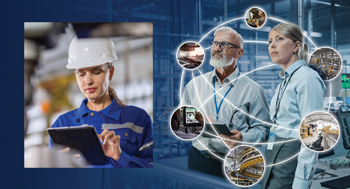 At a strategic level, Ujigami represents a shift in how manufacturers think about intelligence. Rather than treating it as a layer of analysis applied after production, the company embeds intelligence within the production process itself. This approach transforms the factory from a reactive environment into a proactive system capable of continuous optimization.
As Dickson observes, “The system ensures that no process will pass a defect.” This statement encapsulates the company’s philosophy: quality is not inspected into a product; it is engineered and controlled in the process. By enforcing this principle at every stage of production, Ujigami enables manufacturers to achieve zero defect manufacturing environments.
Defining the Next Generation of Industrial Innovation
In an industry increasingly defined by complexity and competition, the ability to respond in real time has become a critical differentiator. Ujigami’s intelligent logic layer offers a pathway to this capability, bridging the gap between data and action. By unifying systems, automating decisions, and maintaining continuous control over production, the company is redefining what manufacturing intelligence can achieve.
The result is not merely improved efficiency, but a new operational paradigm. Factories become adaptive systems, capable of responding dynamically to changing conditions. Products move through production with a level of precision and consistency that was previously unattainable. Organizations gain the ability to scale these capabilities across their operations, creating a foundation for sustained competitive advantage.
Ujigami’s contribution extends beyond technology. It represents a rethinking of manufacturing itself, one in which intelligence is not an external tool, but an intrinsic property of the system. As the industry continues to evolve, this perspective will define the next generation of industrial innovation.
What Do Manufacturing Intelligence Solutions Help Manufacturers Control?
Manufacturing Intelligence Solutions help manufacturers move beyond passive monitoring by connecting production data to the decisions that shape work on the plant floor. They support real-time visibility, process coordination, quality checks and corrective action when conditions shift. Instead of leaving teams to interpret disconnected reports after a problem appears, the category focuses on using current operational context to keep production aligned with specifications, schedules and quality expectations.
How Does Ujigami Apply Manufacturing Intelligence on the Plant Floor?
Ujigami applies Manufacturing Intelligence Solutions through active control, direct communication and rules-based decision-making across plant-floor operations. Its platform connects with operators, machines, sensors and equipment, then evaluates activity against defined specifications in real time. The company’s approach emphasizes automated adjustments rather than simple data display, allowing manufacturing teams to respond to deviations while work is still in motion.
What Capabilities Are Common in Manufacturing Intelligence Platforms?
Manufacturing Intelligence Solutions often include device connectivity, contextual data collection, workflow coordination, automated alerts, decision rules, quality tracking and performance reporting. Strong platforms help users understand not only what happened, but why it matters within a specific production process. In a mature deployment, machine intelligence is close enough to the work to shape routing, checks, sequencing and escalation while information is still current. This makes data more useful for teams that need to reduce downtime, manage variation, improve first-pass quality and keep complex production steps synchronized.
Why Is Real-Time Control Important in Manufacturing Operations?
Real-time manufacturing control is important because production problems can become expensive when they are discovered too late. Manufacturing Intelligence Solutions help close the gap between detection and action by linking live data with predefined process logic. When the system can identify an issue, trigger containment or guide the next step quickly, teams gain a more consistent way to protect throughput, quality and delivery commitments. It also supports operators by turning shop-floor signals into prompt instructions before small issues become repeated defects.
How Does Ujigami Support Connected and Intelligent Production?
Ujigami supports connected production by focusing on plant floor connectivity across both modern equipment and older assets, including legacy machines. Its platform is presented as a flexible environment that can collect meaningful data, understand manufacturing context and help control production activity. Within Manufacturing Intelligence Solutions, that combination matters because many factories need intelligence without replacing every device, rebuilding the entire technology stack or waiting on narrow interface standards.
What Should Buyers Evaluate Before Choosing a Solution?
Buyers evaluating Manufacturing Intelligence Solutions should look for reliable integration, low-latency decision support, traceable rules, clear operator guidance and reporting that connects performance to practical action. The right fit should also match the plant’s process complexity, quality requirements and implementation constraints. Buyers should also ask who can configure rules, how changes are tested and whether the system supports continuous improvement without making every adjustment dependent on custom coding. A useful manufacturing intelligence platform should make it easier to act on data, not add another layer of disconnected dashboards.
Company
Ujigami
Management
Edward Dickson, President
Description
Ujigami transforms manufacturing intelligence by acting as the logic layer that unifies machines, sensors, and processes. Its system enables real-time decision-making, reduces complexity, and enhances quality, allowing manufacturers to achieve synchronized, efficient, and stress-free operations without heavy programming or disruption.

Manufacturing Technology Insights Weekly Brief
Be first to read the latest tech news, Industry Leader's Insights, and CIO interviews of medium and large enterprises exclusively from Manufacturing Technology Insights
