
Industrial And Automation Solutions In Latin America | Manufacturing Technology Insights

Industrial and Automation Solutions in Latin America

Industrial and automation solutions support process improvement across manufacturing and operational environments. With a focus on control systems, production efficiency, equipment integration and workflow optimization, they help businesses improve productivity and operational reliability.

IASA: From Isolated Systems to Unified Operations
IASA
From Isolated Systems to Unified Operations
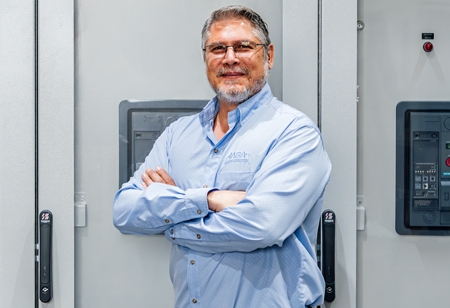
Gabriel Rouanet, General Manager, Electronic Engineer, IASA & Gustavo Lara, Chief of Automation Department, IASA

Founded in 2006, IASA began with a clear focus on automation services, supporting industrial systems through programming and on-ground execution. As client needs evolved, standalone automation proved insufficient, with manufacturers seeking integrated solutions that connect control systems, electrical infrastructure and operational data. In response, IASA expanded its capabilities to deliver end-to-end, tailored solutions aligned with each client's operational environment.

Industrial Automation Solutions Powering Smart Manufacturing Growth in Latin America

Industrial and automation solutions have become fundamental to advancing modern manufacturing and industrial ecosystems. As global industries face growing pressure to enhance efficiency, control operational costs and maintain consistent product quality, automation has emerged as a critical driver of transformation. Organizations adopting scalable and adaptable automation frameworks are better equipped to meet evolving market expectations, strengthen operational resilience and sustain long-term growth in an increasingly competitive landscape across regions, including Latin America.

Establishing Control and Visibility in Industrial Automation Systems

Industrial and automation environments are under pressure to move beyond isolated control systems toward integrated production intelligence. Many facilities still operate with fragmented architectures where programmable logic controllers, supervisory systems and enterprise platforms function in parallel rather than in coordination. This disconnect often results in manual reporting, delayed decision-making and limited visibility across production, quality and resource consumption. Executives evaluating automation partners are no longer focused solely on machine-level control but on how effectively information flows across the plant and into business systems.

Industrial and Automation Solutions in Latin America Info

Q1
What Do AI Intelligent Automation Solutions Do for Organizations?
AI intelligent automation solutions combine artificial intelligence, workflow automation and data-driven decision-making to reduce manual effort and improve consistency. Organizations use these systems to automate repetitive tasks, monitor processes and respond to changing conditions faster. In manufacturing, logistics, finance and customer service environments, Top AI Intelligent Automation Solutions help teams spend less time on routine work and more time on exception handling, planning and improvement.
Q2
What Services and Capabilities Are Included in AI Intelligent Automation Solutions?
The scope varies by provider, but most AI intelligent automation solutions include process automation, machine learning, predictive analytics, document processing, workflow orchestration and system integration. Some platforms also support computer vision, intelligent reporting and decision support. Buyers exploring Top AI Intelligent Automation Solutions should look beyond feature lists and examine how easily the solution connects with existing software, data sources and business processes. Most organizations already have systems that need to work together.
Q3
Why Is Demand for AI Intelligent Automation Solutions Growing?
Demand continues to rise because organizations face pressure to improve productivity while managing labor constraints, rising costs and growing data volumes. Many teams still rely on spreadsheets, email chains and manual approvals that slow work down. Top AI Intelligent Automation Solutions help address these challenges by reducing repetitive tasks, improving visibility and enabling faster responses to business events. Interest is also growing as AI tools become more practical and easier to deploy across everyday workflows.
Q4
How Should Organizations Evaluate AI Intelligent Automation Providers?
Evaluation should focus on real-world performance rather than marketing claims. Decision-makers should test the solution using an actual workflow, such as invoice processing, maintenance requests or customer support routing. Review how the provider handles integration, security, governance and user adoption. The strongest Top AI Intelligent Automation Solutions demonstrate measurable improvements under realistic conditions rather than only in demonstrations. A disconnected automation project can create as much frustration as the manual process it replaces.
Q5
What Business Value Can AI Intelligent Automation Solutions Deliver?
The value often appears through faster processing, fewer errors and improved resource utilization. Organizations may reduce delays caused by manual handoffs, duplicate data entry and inconsistent decision-making. Top AI Intelligent Automation Solutions can also support compliance efforts by creating clearer audit trails and standardized workflows. Small process improvements become significant when repeated thousands of times across departments, facilities or service teams.
Q6
What Role Do AI, Data and Innovation Play in Intelligent Automation?
Innovation in this category increasingly centers on predictive capabilities, adaptive workflows and AI-assisted decision support. Modern AI intelligent automation companies are moving beyond simple rule-based automation and incorporating technologies that learn from historical data and changing conditions. Many AI intelligent automation providers now support predictive maintenance, intelligent quality monitoring and automated recommendations. Within Top AI Intelligent Automation Solutions, the focus is shifting from automating individual tasks to helping organizations coordinate entire workflows more effectively.