

THANK YOU FOR SUBSCRIBING

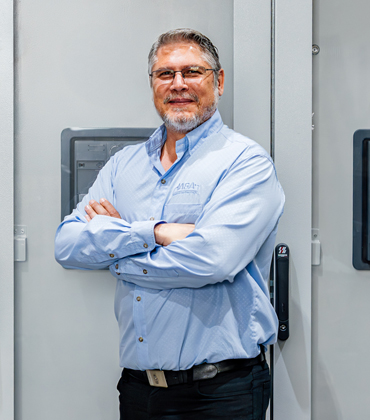 Gabriel Rouanet, General Manager, Electronic Engineer, IASA & Gustavo Lara, Chief of Automation Department, IASA
“We believe we are the doctors of the production of our clients where we diagnose and repair,” says Gabriel Rouanet, general manager and electronic engineer.
Two factors define IASA's approach. First, there are no standard solutions. Every system is custom-built to match real operational workflows. Second, its open system model avoids restrictive software, allowing seamless integration, scalability and full client control over data and systems.
At its core, IASA connects enterprise planning with shop-floor execution through GMA, an in-house platform that links ERP systems, automation infrastructure and operational data. GMA reads production orders from ERP platforms such as SAP, executes them through PLC and SCADA systems and returns real-time information on production, consumption, inventory and performance. The platform also captures utility data, including energy, water and compressed air usage, while integrating laboratory, maintenance and quality information to create a complete digital record for each job. This enables full traceability across operations while providing real-time visibility into production performance and resource utilization.
As Gustavo Lara, chief of automation department, notes, “We don't have or it's not very common to have a standard solution. We just have to work with the customer and build a solution exactly for their particular need.”
A key advantage of GMA is its flexibility. Because the system is developed entirely in-house, it can integrate with legacy equipment, third-party applications and client-specific architectures, allowing IASA to build solutions around existing operations rather than forcing facilities into predefined structures.
The platform transforms production and resource data into actionable operational metrics, including OEE. It automatically detects equipment downtime, correlates events with production variables and provides both real-time visibility and historical analysis. By integrating laboratory data, quality control records, inventory systems and ERP platforms, it creates a unified production record that supports end-to-end traceability throughout the manufacturing process.
As a web-based system, it provides secure access through standard web browsers, enabling managers, operators and executives to monitor performance and make informed decisions from virtually anywhere. Its flexibility has supported deployments across a variety of industrial environments, including feed mills and palm oil processing facilities where visibility and operational control are critical.
Alongside its software capabilities, IASA delivers motor control centers, power distribution panels and control systems while also managing installation and commissioning. Together, these elements enable the company to provide integrated solutions that connect equipment, processes and business systems.
A Four-Pillar Operating Model
IASA structures its operations around four core pillars that ensure consistency across every engagement. The project pillar focuses on implementation, covering system design, integration and commissioning. The supply pillar ensures access to reliable equipment through established partnerships with global component manufacturers.
The service pillar delivers ongoing 24/7 support, enabling rapid diagnosis and resolution to keep operations running. The administration pillar ties everything together by consolidating production, quality, inventory and business data into a unified environment for reporting, analysis and decision-making.
Together, these pillars provide a repeatable framework for delivering tailored yet dependable solutions.
Customization as a Core Operating Principle
Both Rouanet and Lara emphasize a customer-first approach, rejecting one-size-fits-all solutions. Instead, each system is custom-built around the client's actual workflow, ensuring alignment with real day-to-day operations rather than standard models.
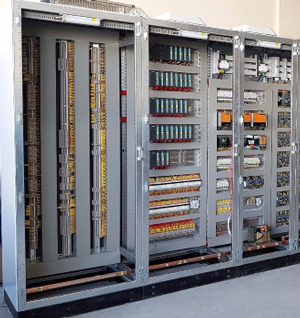 A recent engagement with an animal feed manufacturer highlights IASA's execution capability. The company completed a full plant control upgrade in two weeks, replacing legacy systems across an operation with around 200 motors and more than 600 I/O points. Fully integrated with SAP, the new system enabled production to be driven directly by live sales orders.
It also supported multi-location coordination, with planning managed from Mexico and execution in Guatemala through a centralized platform. By connecting ERP, automation and reporting layers, IASA transformed a manual, paper-based setup into a fully digital operation delivering precise batch control, real-time visibility and complete traceability.
IASA's strength lies in combining hardware, automation, software and ongoing service into a unified operating model. Through GMA, it integrates ERP, production, quality and utility systems while transforming operational data into actionable performance metrics. Together, these capabilities enable manufacturers to move from fragmented operations to fully connected, data-driven production environments with complete visibility and control, bringing clarity, consistency and precision to modern industrial operations.
What Business Problems Do AI Intelligent Automation Solutions Help Solve?
Many organizations still rely on disconnected processes, manual data entry and delayed decision-making. AI Intelligent Automation Solutions help reduce those bottlenecks by combining automation, analytics and artificial intelligence into a single workflow. Instead of moving information between separate systems by hand, teams can automate repetitive tasks, improve response times and gain better visibility into daily business activity. The value often comes from removing friction that slows work down rather than simply adding another technology layer.
How Does IASA Approach AI-Driven Automation Projects?
IASA focuses on helping organizations turn data, processes and business rules into practical automation initiatives. Its work centers on intelligent technologies that support process efficiency, decision support and digital transformation efforts. Rather than treating automation as a stand-alone tool, IASA aligns AI Intelligent Automation Solutions with existing business environments so organizations can improve workflow execution while maintaining continuity across departments. That approach is particularly valuable when companies need measurable improvements without disrupting core operations.
What Should Organizations Look for When Evaluating AI Intelligent Automation Solutions?
A strong evaluation starts with the workflow itself. Organizations should examine where delays occur, how information moves between teams and which tasks consume the most manual effort. Effective AI Intelligent Automation Solutions should be able to integrate with existing systems, support data accuracy and provide visibility into automated decisions. Testing a solution against real business scenarios is often more useful than reviewing feature lists because it shows how the technology performs under everyday conditions.
Why Is Intelligent Automation Becoming More Important Across Industries?
Business environments generate larger volumes of data than ever before. Manual processing can create reporting delays, inconsistent outcomes and unnecessary costs. AI Intelligent Automation Solutions help organizations process information faster while supporting better decision-making. In many cases, automation allows employees to focus on customer service, planning and problem-solving rather than routine administrative work. The result is often greater consistency and improved use of internal resources.
How Can AI Intelligent Automation Solutions Improve Decision-Making?
Good decisions depend on timely and reliable information. AI Intelligent Automation Solutions can collect data from multiple sources, identify patterns and deliver insights more quickly than traditional manual processes. Instead of waiting for reports to be assembled, managers can review information in near real time and respond to changing conditions faster. This can be especially useful when organizations need to monitor performance, track service levels or identify process exceptions before they become larger problems.
What Distinguishes IASA Within the Intelligent Automation Market?
Recognition as the Top AI Intelligent Automation Solution in Latin America 2026 reflects IASA's emphasis on combining automation capabilities with artificial intelligence to address practical business challenges. Its work is centered on helping organizations improve efficiency, strengthen decision support and make better use of enterprise data. While many automation initiatives focus narrowly on task execution, IASA's approach to AI Intelligent Automation Solutions connects automation with broader business objectives, creating workflows that support both productivity and informed decision-making.
Company
IASA
Management
Gabriel Rouanet, General Manager, Electronic Engineer, IASA & Gustavo Lara, Chief of Automation Department, IASA
Description
IASA delivers industrial automation and integration solutions that connect production systems with enterprise data. The company combines control engineering, electrical infrastructure and proprietary platforms to unify operations.

Manufacturing Technology Insights Weekly Brief
Be first to read the latest tech news, Industry Leader's Insights, and CIO interviews of medium and large enterprises exclusively from Manufacturing Technology Insights
