

THANK YOU FOR SUBSCRIBING
Inside an injection-molding machine, thousands of tiny glass spheres must survive tremendous pressure and shear forces. Their purpose is to make the finished plastic component lighter, but that advantage disappears if the spheres break during processing. The material must withstand the production conditions before it can deliver the performance engineers designed it for. This relationship between material properties and manufacturing demands defines much of 3M's work in advanced materials. The company engineers materials that address specific performance requirements while remaining compatible with the processes used to make finished products. Its portfolio includes hollow glass microspheres for lightweight components, boron nitride fillers for thermal management, high-temperature ceramics and friction-enhancing materials for mechanical assemblies. Each addresses a different engineering challenge, but the underlying approach remains consistent. Rather than relying exclusively on changes to component design or production equipment, 3M [NYSE:MMM] works at the material level to expand what manufacturers can achieve.
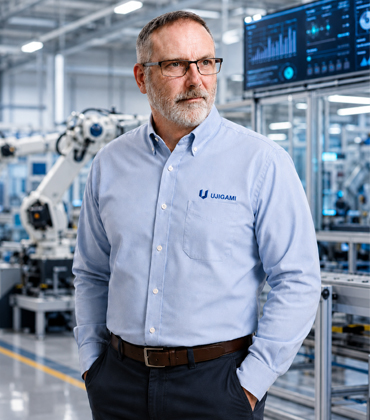
Manufacturing Execution Systems (MES) were originally intended to coordinate, control, and report production on the plant floor. Today, they primarily function as data collection and reporting systems, as real-time coordination and control have proven difficult to deliver consistently at scale. As a result, these responsibilities have shifted to other custom systems, creating a gap in production management. Ujigami is designed to address this gap by directly coordinating and controlling production on the plant floor. The platform connects to machines, sensors, and operator workflows, enabling it to coordinate and control equipment behavior and operator activity during production. At the same time, it captures the data required for downstream analytics and reporting, while also providing a rich data lake for BI systems. “Our purpose-built MES delivers active control within plant-floor systems, with advanced reporting and external BI system integration, designed to deliver flexible, user-defined analytics,” says Edward Dickson, president..

Digit Technologies is a forward-thinking startup on a mission to transform how manufacturers and distributors operate in an industry dominated by outdated ERP systems. Its platform unifies essential processes, including production, inventory, order tracking, procurement and shipping, into one intuitive interface to deliver real-time visibility, automation and collaboration. Unlike traditional ERP systems, which are slow to deploy, costly to maintain and often rigid, Digit is built for speed, flexibility and affordability, helping manufacturers go live in days. “We built Digit to be the all-in-one system—powerful enough to handle the complexity of manufacturing, but simple enough for anyone on the shop floor to use without training,” says Dan Koukol, CEO and co-founder. For years, manufacturers have patched together spreadsheets and siloed tools, making it hard to plan ahead, spot issues early or improve efficiency. Digit’s founders knew this problem well because they had lived it. Koukol spent nearly a decade working closely with manufacturers across the U.S. as a consultant, helping untangle bottlenecks and improve operational performance. Driven by a passion for hands-on problem-solving, he joined a struggling injection molding manufacturing business as the CEO and turned it profitable. In both roles, it became clear that no modern software tools were truly built for the realities of the factory floor. In 2021, Koukol and his co-founders launched Digit with a simple but ambitious idea: to build the system they always wished existed—a modern operating system for manufacturing, built by manufacturers, not just engineers.
ECM

John Vargo, Director Manufacturing Execution Systems, RoviSys
Electronics Manufacturing

Derek McKenney, Vice President, Manufacturing Operations, Puritan Medical Products
Prototype Engineering

Jason Bradley, Director Of Engineering, Mueller Water Products [NYSE: MWA]
Advanced Materials

Paul Craig, Senior Director of Technology Strategy, Ledcor
Contract Packaging

Lirong Bao, Global Science & Technology Director, Aerospace Materials, PPG

Industrial Automation
James Stewart, PMP, North America Head of World Class Operations, Huhtamaki
Industrial Automation
Larry Saidman, Chief Technologist - R&D, Nordson Corporation
Manufacturing Execution Systems enhance control, real-time visibility, quality management, and integration across production operations for improved efficiency and decision-making.
Advanced materials technologies are transforming manufacturing through improved material performance, innovative production methods, greater resource efficiency, and enhanced product durability.
Connecting Material Innovation with Manufacturing Excellence
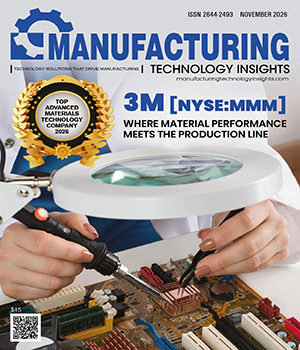
The cover story of the issue highlights 3M [NYSE:MMM], which has been named the Top Advanced Materials Technology Company 2026. The company’s advanced materials are used in a range of manufacturing applications, including the production of lightweight components as well as thermal management and high-temperature performance. Glass Bubbles are useful for reducing component weight and shortening moulding cycle times, whereas Boron Nitride Cooling Fillers offer thermal conductivity together with electrical insulation. Nextel ceramic fibres are capable of withstanding harsh high-temperature conditions, and Friction Shims increase resistance to slippage in mechanical connections. These technologies show how materials engineering can enhance component performance and at the same time make manufacturing processes more efficient.
The issue also features Ujigami, recognized for Top Manufacturing Execution System MES 2026. Its platform connects machines, operators and production activities in real time. Digital work instructions, process verification and unit-level traceability help manufacturers maintain quality and detect problems earlier. Its implementation at Ground Effects Manufacturing shows how the platform can expand across multiple facilities after an initial deployment.
Our contributors bring additional perspectives on improving manufacturing operations. Jason Bradley, Director of Engineering at Mueller Water Products, discusses how additive manufacturing helped solve a challenging casting requirement and prompted further investment in advanced tooling. James Stewart, PMP, North America Head of World Class Operations at Huhtamaki, emphasizes the value of shopfloor engagement, describing how operator feedback and open communication improve problem-solving, efficiency and employee satisfaction.
Together, these make one point clear. Manufacturing improvement depends on more than adopting new technology. Combining advances in materials, better production control and practical knowledge from frontline employees can help manufacturers run more efficient, dependable and adaptable operations.

Manufacturing Technology Insights Weekly Brief
Be first to read the latest tech news, Industry Leader's Insights, and CIO interviews of medium and large enterprises exclusively from Manufacturing Technology Insights
