



THANK YOU FOR SUBSCRIBING
Industrial automation has entered an era defined by software-driven intelligence. Control systems now span from deterministic PLCs on the plant floor to edge servers orchestrating data across distributed assets. However, despite advances in connectivity and computing power, much of the industry still operates on architectures tightly bound to specific hardware, protocols, and operating systems. Across the automation stack, fragmentation remains endemic. Substation and grid systems use IEC 61850 and DNP3, process industries rely on Modbus or Profinet, transportation uses CAN J1939, and IoT favors MQTT and OPC UA, among others. Each protocol is context-specific, creating incompatible data models and timing behaviors. Integrating them requires converters or middleware, which adds latency, reduces determinism, and increases complexity. At the software layer, many industrial control platforms are monolithic and hardware-coupled, with runtimes compiled for specific chipsets or operating systems. Scaling from a bare-metal controller to a multi-core Linux gateway requires re-architecting code, revalidating timing, and rebuilding communication stacks. This tight software and hardware coupling slows innovation and drives up costs when flexibility is most valuable. What is needed is a universal runtime: modular, hardware-agnostic, able to run bare-metal or scale under Linux and Windows, and capable of integrating with existing protocols. C-based architectures excel in this area. They are efficient enough for real-time control yet portable across any hardware or operating system. A runtime built in C moves seamlessly between platforms without performance loss or the need to rewrite code. This is the foundation of STRATON AUTOMATION. Delivered as portable C code, its flagship software platform, straton ®, can be embedded directly into a microcontroller or deployed on a server cluster, executing the same logic without modification. Its independence from any operating system or hardware abstraction layer eliminates the legacy friction that defines most industrial runtimes.
From semiconductor fabs to advanced electronics, motion systems remain the backbone of modern manufacturing. For OEMs, the challenge is no longer limited to a fast movement; it is now about achieving fast, accurate, and reliable performance every millisecond of every production cycle. In this environment, even the smallest disturbance, such as floor vibrations, position jittering, temperature fluctuation or contamination, can disrupt an entire process. Traditional motion setups, built from parts sourced across multiple vendors, often fall short in maintaining the tight integration required for peak performance. That is where ETEL gains its edge. With its Full Forward Integration (FFI) strategy, ETEL takes full ownership of the entire motion stack. This includes the supporting frame, active or passive isolation systems, the motion system—featuring optimized direct drive motors and advanced metrology—and motion control. The FFI approach ensures that every element is optimized to work together. The result is motion systems that are faster, more precise, ultra-stable and consistently reliable under real-world production pressures. This eliminates fragmentation and accountability issues that once plagued manufacturers relying on multiple component suppliers. By unifying every part under one roof, the company enables customers to focus on their core competencies with confidence in flawless motion performance. “The performance we deliver has a direct impact on our customers’ process yield and accuracy,” says Hervé Stämpfli, Head of Product Management. “And since we control every layer of the motion stack, we are able to meet those performance requirements very reliably.” MOTION SOLUTIONS AND ADVANCED CONTROL TECHNOLOGIES ETEL offers a diverse portfolio of motion technologies and systems for equipment manufacturers in the semiconductor and advanced electronics industries. Under its FFI approach, every solution supports a wide range of applications, from Front-end to Back-end segments, including lithography, process control, annealing, probing, dicing, wire, die and flip-chip bonding, test handlers, and more. “Today, the majority of our high-end motion system applications are propelled by the demands in Advanced Packaging, with heterogeneous integration playing a central role. This evolution is reshaping traditional semiconductor segmentation. Where the back-end once prioritized high throughput with moderate precision, and the front-end focused on ultra-high accuracy and cleanliness, Advanced Packaging is forging a new “mid-end” segment — one that requires all these attributes to coexist and perform together seamlessly,” says Hervé..

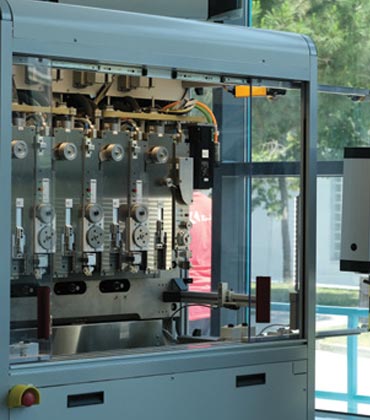
If you are to lift the hood of nearly one in seven passenger vehicles worldwide, chances are you’ll find Kirpart’s precision-engineered engine components driving the vehicle performance across 30+ countries. In key markets like Germany, Austria, Brazil and China, Kirpart commands a whopping 81 percent market share, with 78 percent exports to China alone. With over three decades of expertise, the company has not only solidified its leadership in motor cooling systems but is now seamlessly transitioning into the realm of cutting-edge electric vehicle (EV) technologies. “The secret sauce of our success,” says Süleyman Kahraman, project coordinator, “lies in the synergy between our advanced R&D team, cutting-edge engineering, material technologies and smart manufacturing techniques.” A blend of innovation and customer focus makes Kirpart a global powerhouse in producing high-quality engine cooling components—thermostats, water pumps, oil pumps and other aluminium auto parts. To date, Kirpart has produced over 10 million patented thermostats yearly, leveraging advanced technologies to address global needs. Its innovations include electronic (map-controlled) thermostats for precise temperature management, failsafe thermostats for enhanced safety and lightweight, durable plastic-cover thermostats. Kirpart’s ingenuity shines in high-performance pump solutions developed for super and sports car OEMs meeting strict performance criteria. Building on this legacy, Kirpart is now focused on producing next-generation EV components designed for maximum efficiency, durability and low energy consumption, aligning with its vision to lead innovation in sustainable transportation solutions. Testing for Perfection Kirpart offers comprehensive testing services for both its own products and external customers, focusing on durability, reliability and performance through mechanical, electronic and endurance tests. The company conducts 25 mechanical tests, simulating challenges like dry heat, salt mist and mechanical shock, to evaluate product resilience in harsh environments. In addition, Kirpart performs 30 electronic tests, such as electromagnetic compatibility (EMC) and electrostatic discharge (ESD), to ensure compliance with the CISPR 25 to minimise electromagnetic interference and enhance automotive safety. For long-term reliability, Kirpart provides nine endurance tests, including thermal cycling and pressure pulsation, assessing product performance under extreme conditions. These evaluations take place in advanced laboratories equipped with anechoic chambers for precise EMC testing, simulating real vehicle environments for accurate results. Kirpart’s services help external companies refine their products confidently. Adhering to international standards and employing advanced methodologies, it ensures high-quality outcomes and reinforces its dedication to customer satisfaction. Digitally Driven Processes from Concept to Validation Prototyping Powered by Digital Twins: Kirpart’s product development journey uses simulations in mechanical, fluid and design dynamics to refine product specifications early, streamlining the transition to production.
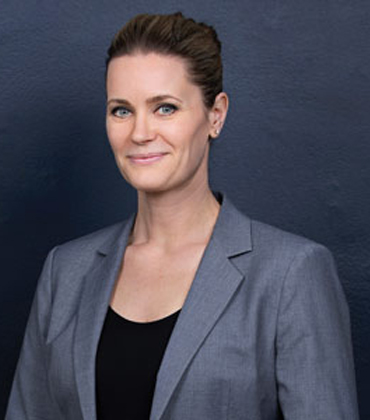
Dr. Emmy Pavlovic, CTO, Bulten Group
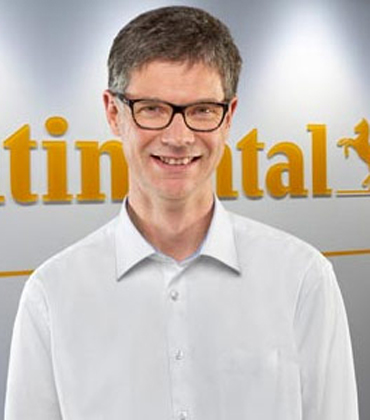
Thierry Wipff, Global Manufacturing Technology Engineering Tires, Continental Tires

Luciano De Oto, Technical Quality Director, McLaren Automotive Ltd
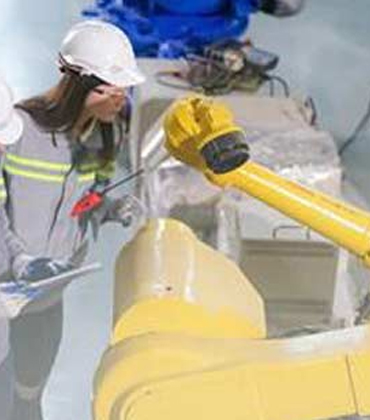
George Triantafyllou, Senior Project Manager & MODAPTO Project Coordinator, and Katerina Kaplani, Pr

Damiano Falcioni, Researcher, BOC Group
Industrial software is transforming European manufacturing by integrating ERP, MES, and PLM systems, creating intelligent ecosystems that enhance efficiency, agility, and sustainability in production processes.
The Connected Intelligence of Manufacturing
Manufacturers are deploying digital twins, AI-driven process control and predictive analytics to monitor assets, forecast failures and fine tune output. Edge computing and IoT integration provide real-time visibility into every layer of the plant, enabling decisions once made by engineers to be executed automatically at the machine level.
As European industries adopt smart manufacturing initiatives, these systems are becoming the foundation of connected factories that can scale output without compromising precision or energy efficiency.
In parallel, thermal management solutions are gaining strategic importance. With rising energy costs and tighter environmental regulations, manufacturers are reevaluating how heat is generated, transferred and dissipated across their equipment. Liquid cooling systems and advanced heat exchangers are replacing traditional setups to manage temperature loads in robotics, power electronics and high density automation systems.
Driven by these developments, the European industrial automation software market is projected to exceed $35.16 billion, while the thermal management market is expected to reach $7.89 billion by 2030, growing at a CAGR of 8.26 percent and 9.5 percent, respectively.
This edition of Manufacturing Technology Insights Europe explores how automation control and thermal innovation are redefining operational excellence across the continent. It features a thought provoking article by Dr. Emmy Pavlovic, CTO at Bulten Group, and Luciano De Oto, Technical Quality Director at McLaren Automotive Ltd.
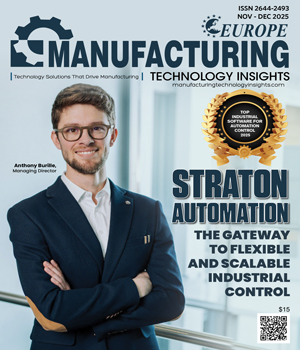
We also bring you the stories of leading organisations driving excellence in automation, control and thermal management. A noteworthy feature is that of STRATON AUTOMATION. This well established company develops modular software solutions for controlling and monitoring machinery and processes, primarily for OEMs and industrial applications.
In this edition, we highlight the leading technologies shaping European manufacturing in 2025. We hope you gain valuable insights to strengthen efficiency and sustainability across your operations.

Manufacturing Technology Insights Weekly Brief
Be first to read the latest tech news, Industry Leader's Insights, and CIO interviews of medium and large enterprises exclusively from Manufacturing Technology Insights
